Kusatsu Onsen in Winter - A Quiet Overnight Stay
Set high in the mountains of Gunma Prefecture, Kusatsu Onsen is one of Japan’s most well known hot spring towns, and one of Japan's 100 unique landmarks for peculiar smells. Famous for its mineral rich waters and the constant rise of steam through the streets, Kusatsu takes on a special charm in winter. Snow softens the town’s edges, the air feels sharper, and the warmth of the onsen becomes even more rewarding. This time, we stayed overnight, which allowed us to experience Kusatsu beyond its busiest hours and see a quieter, more intimate side of the town.
Arrival in Kusatsu Onsen
As soon as we stepped off the bus, the distinct smell of sulphur filled the air, an immediate reminder that Kusatsu is first and foremost a hot spring town. Snow had already fallen, dusting rooftops and pavements, while steam drifted through the streets.
Our hotel was located right opposite the bus station and only a short walk from Yubatake, making it an ideal base. After a quick check in, we left our bags and headed straight out to explore.
Evening Walks Around Yubatake
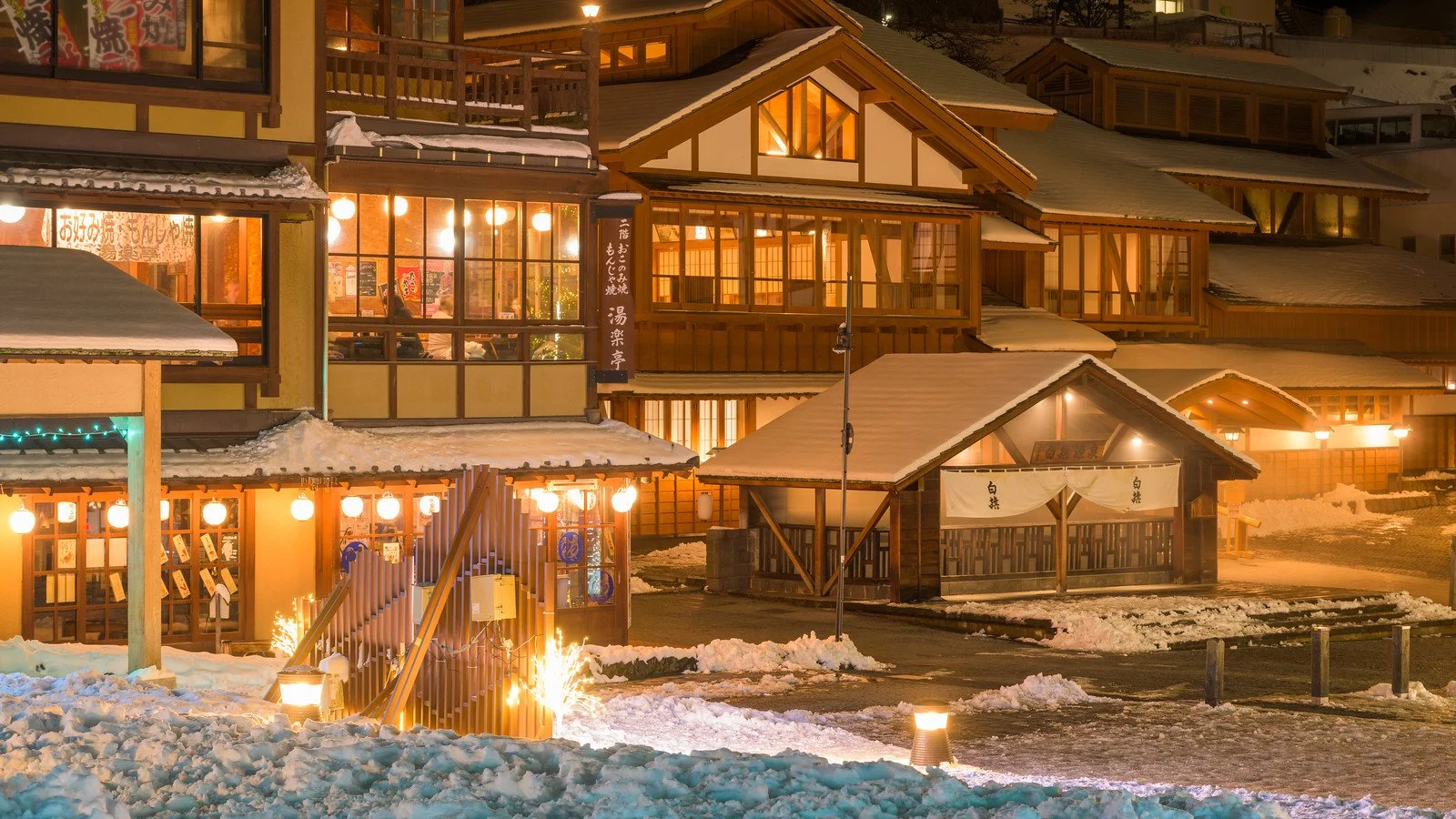
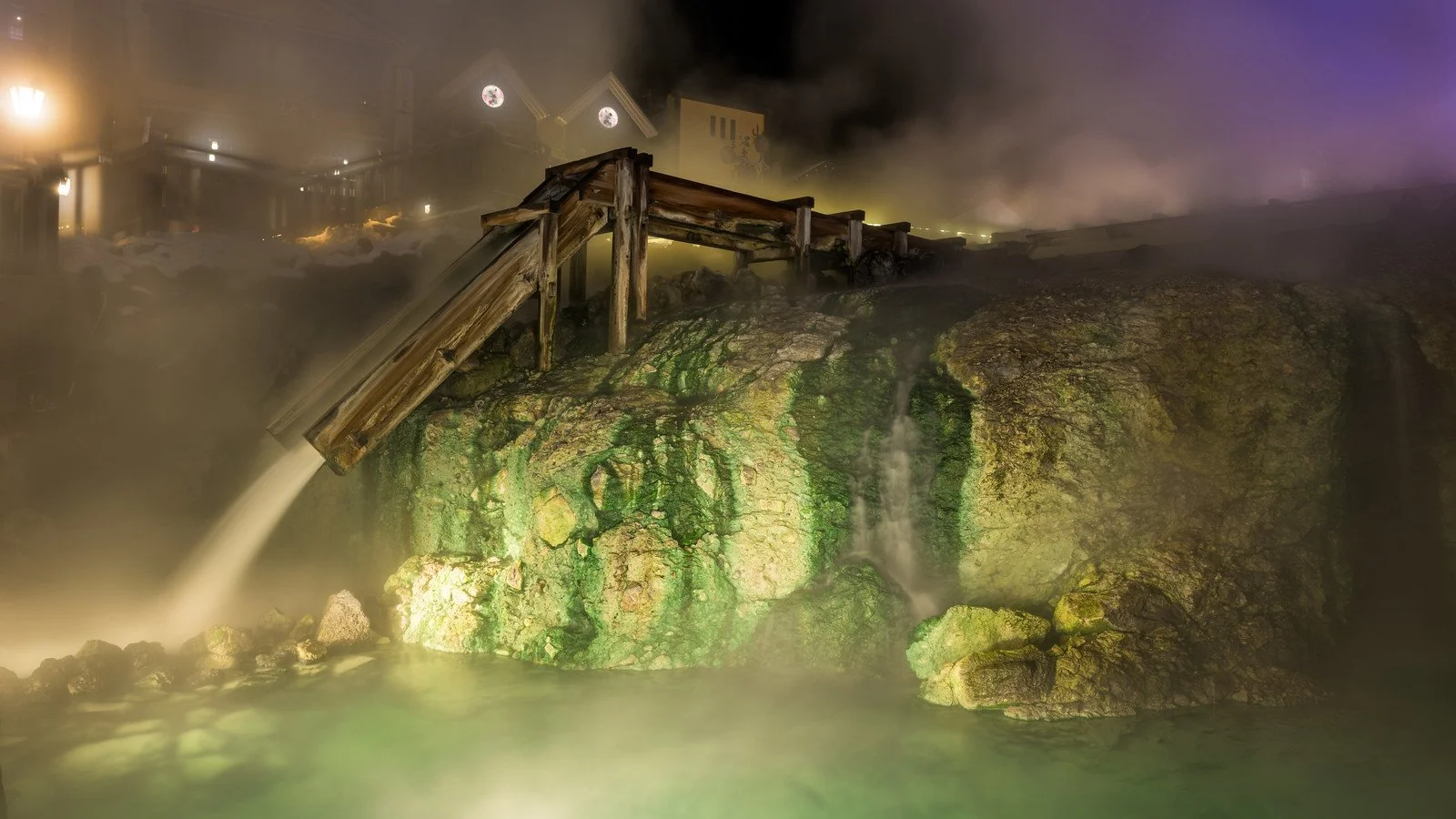
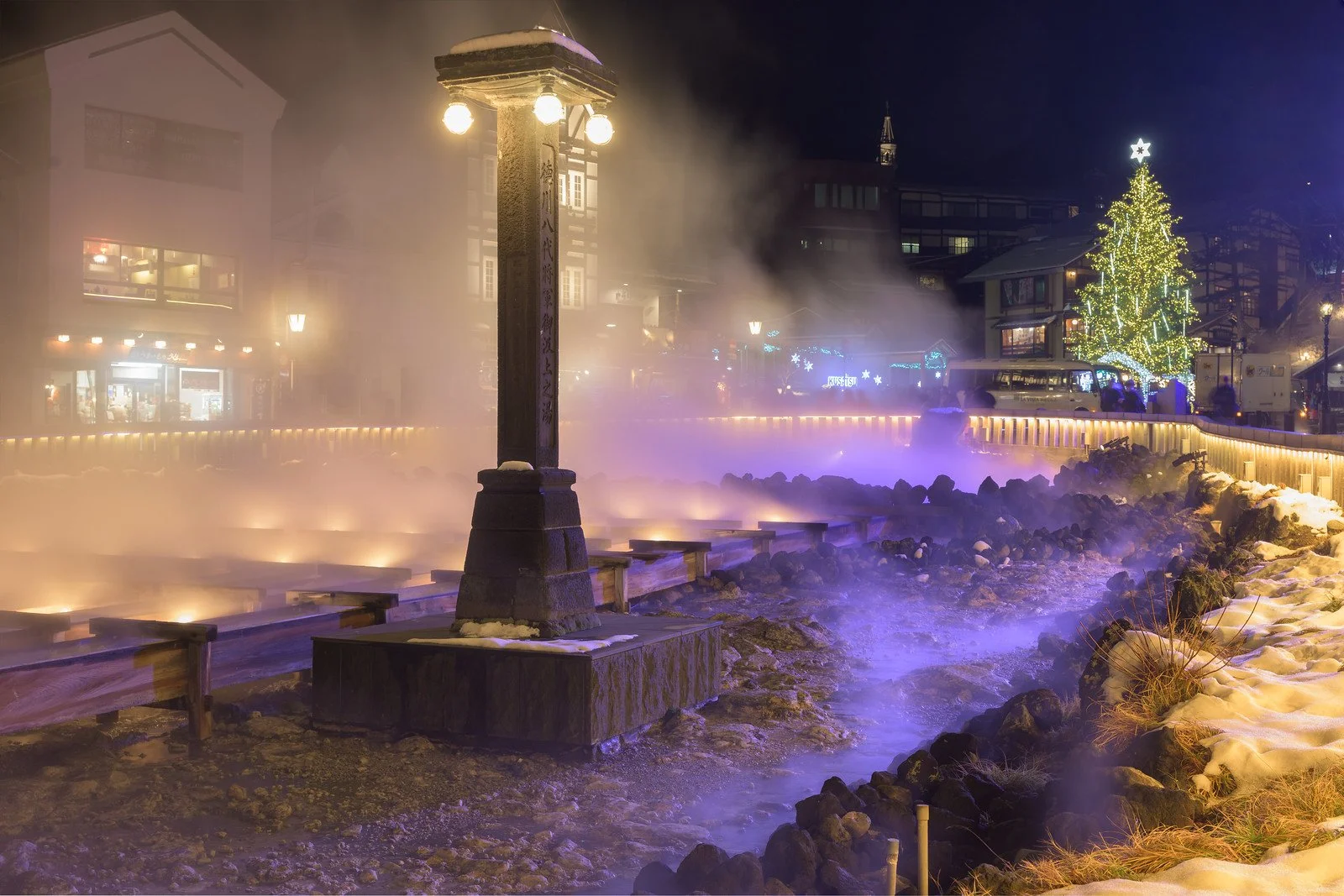
The Yubatake area is the heart of Kusatsu Onsen, and walking through it in the early evening felt both lively and comforting. Steam rose steadily from the wooden channels, glowing softly under the lights. One of the most inviting features of this area is the number of free footbaths scattered around. You can pick up a small snack from a nearby convenience or a local store and soak your feet while the cold air lingers around you. The contrast between warm water and cool winter air is simple but deeply satisfying.
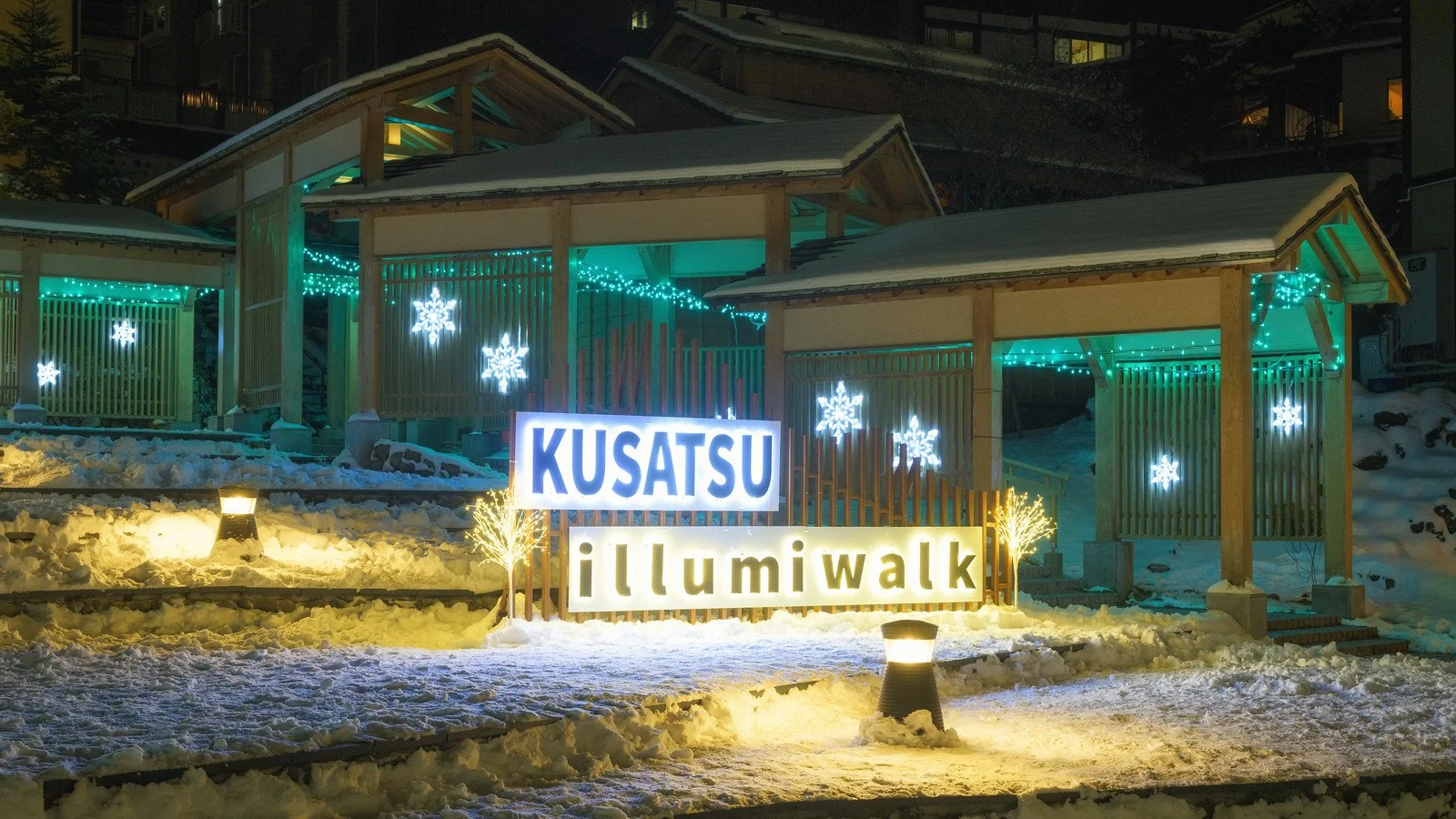
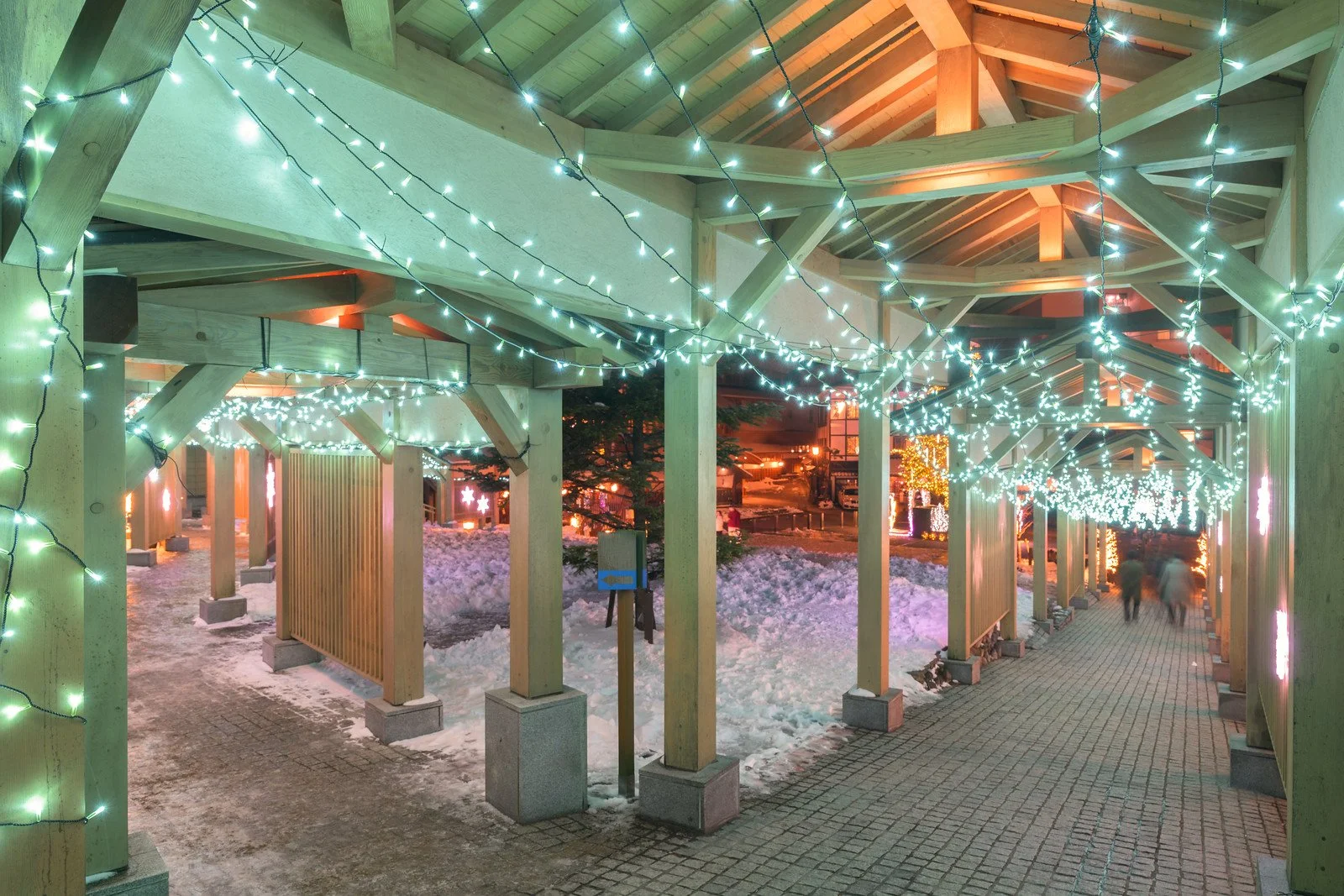
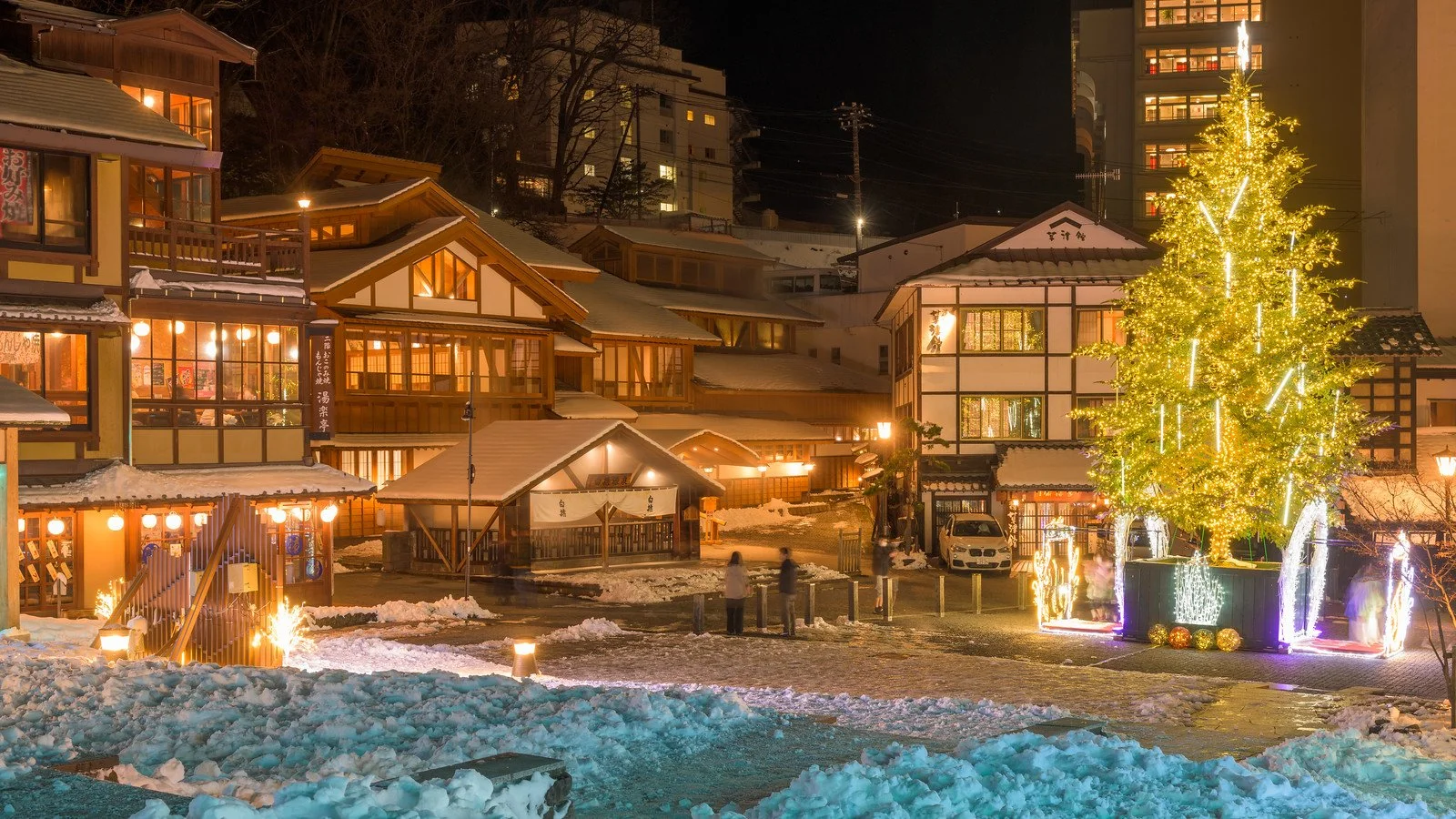
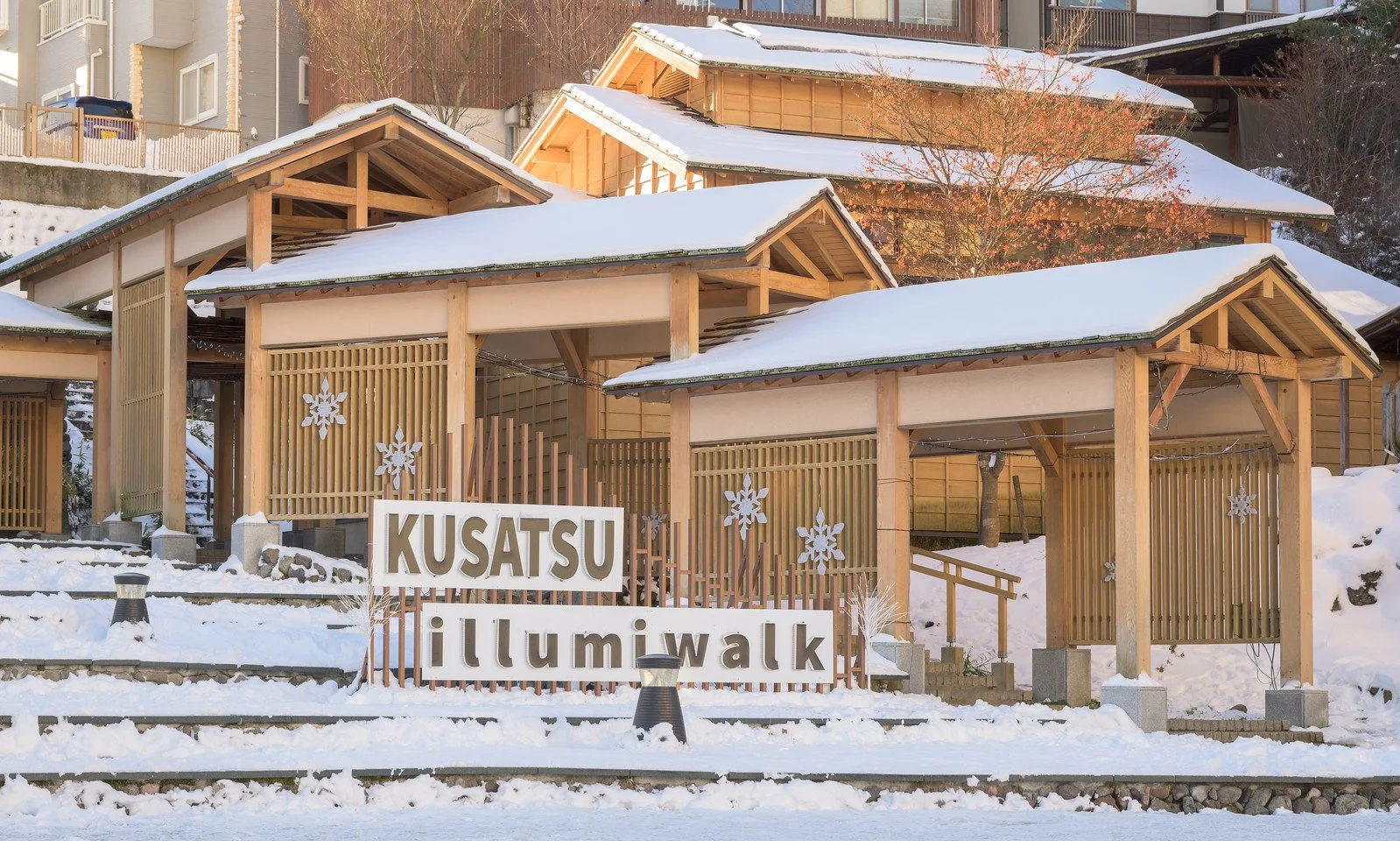
As we wandered further, we came across the Kusatsu Illumination Walk, where soft lights and Christmas decorations added a festive touch to the snowy streets. With many day trippers already gone, the town felt relaxed and unhurried.
Dinner and a Quiet Temple Visit
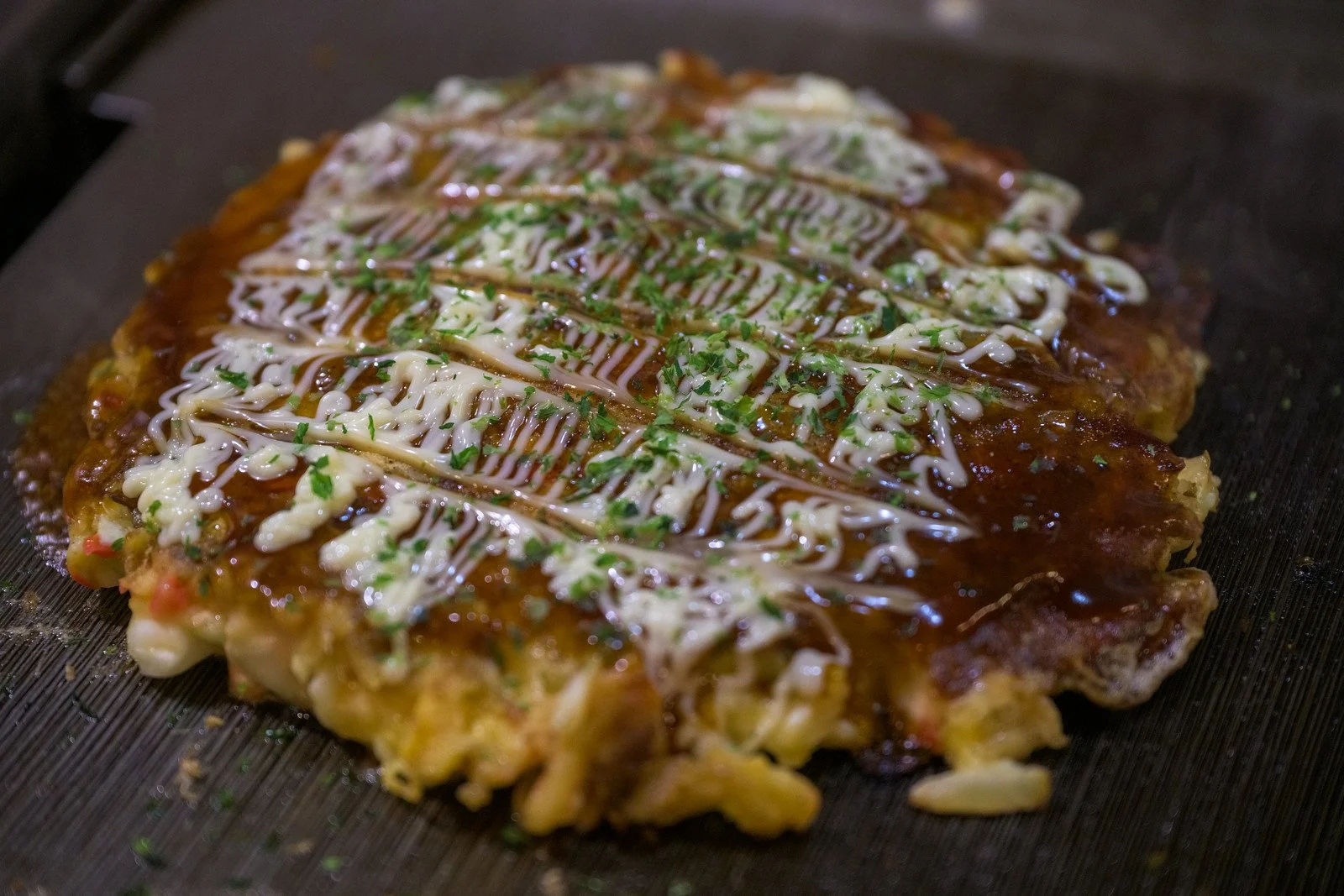
For dinner, we settled into a relaxed evening by making our own okonomiyaki, a comforting and warming meal after hours spent outdoors. With full stomachs and a slower pace, we headed uphill toward Kosenji Temple.
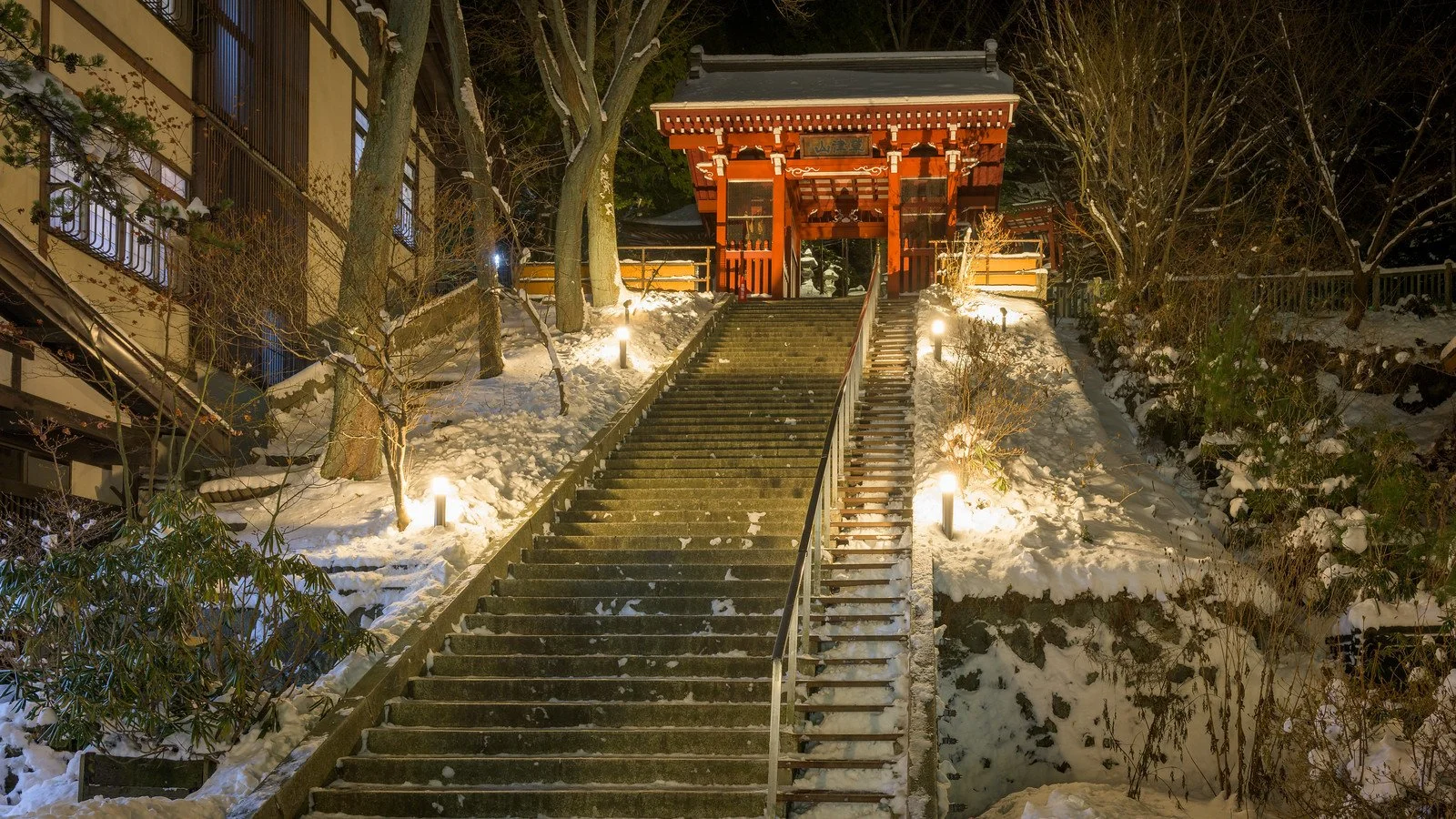
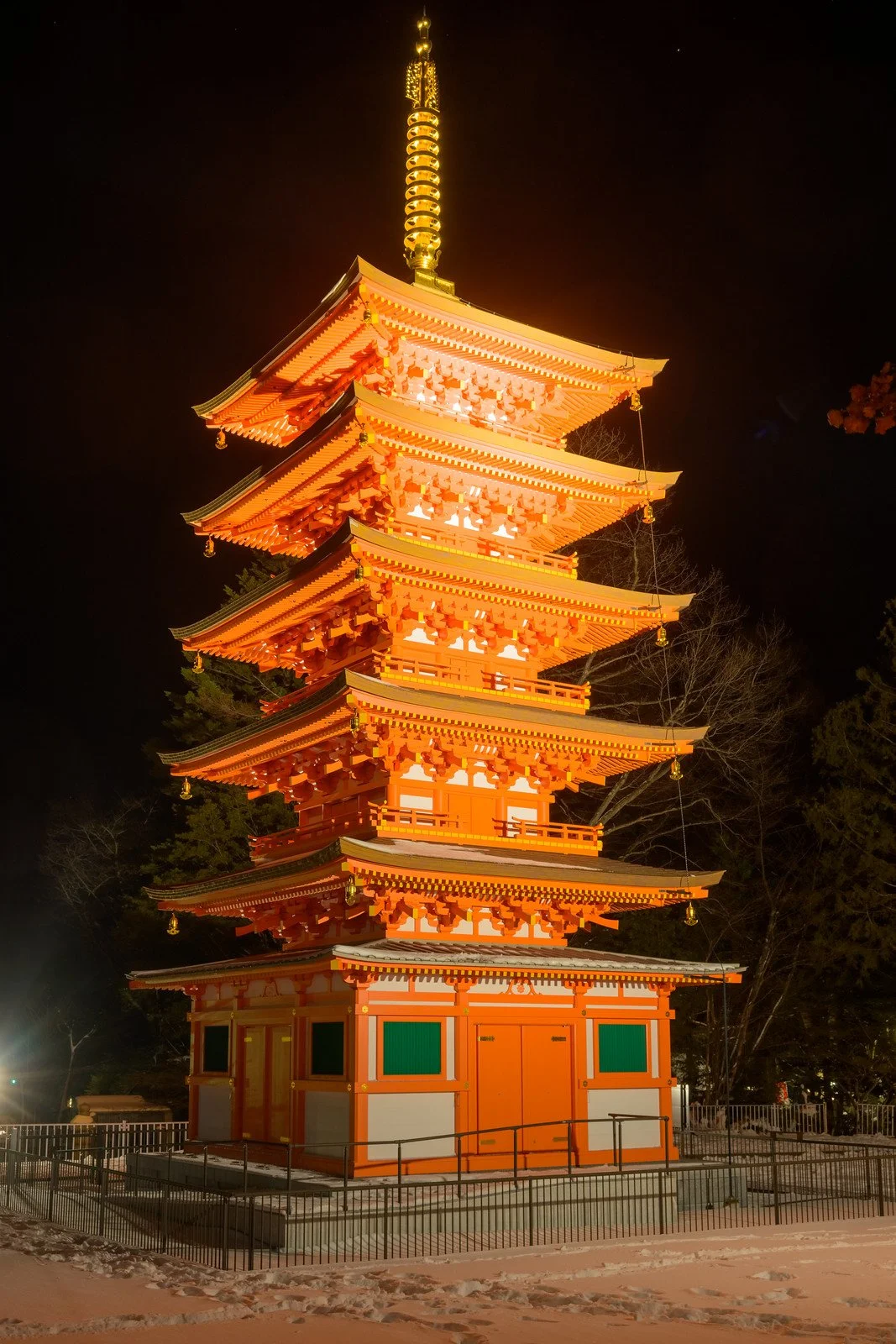
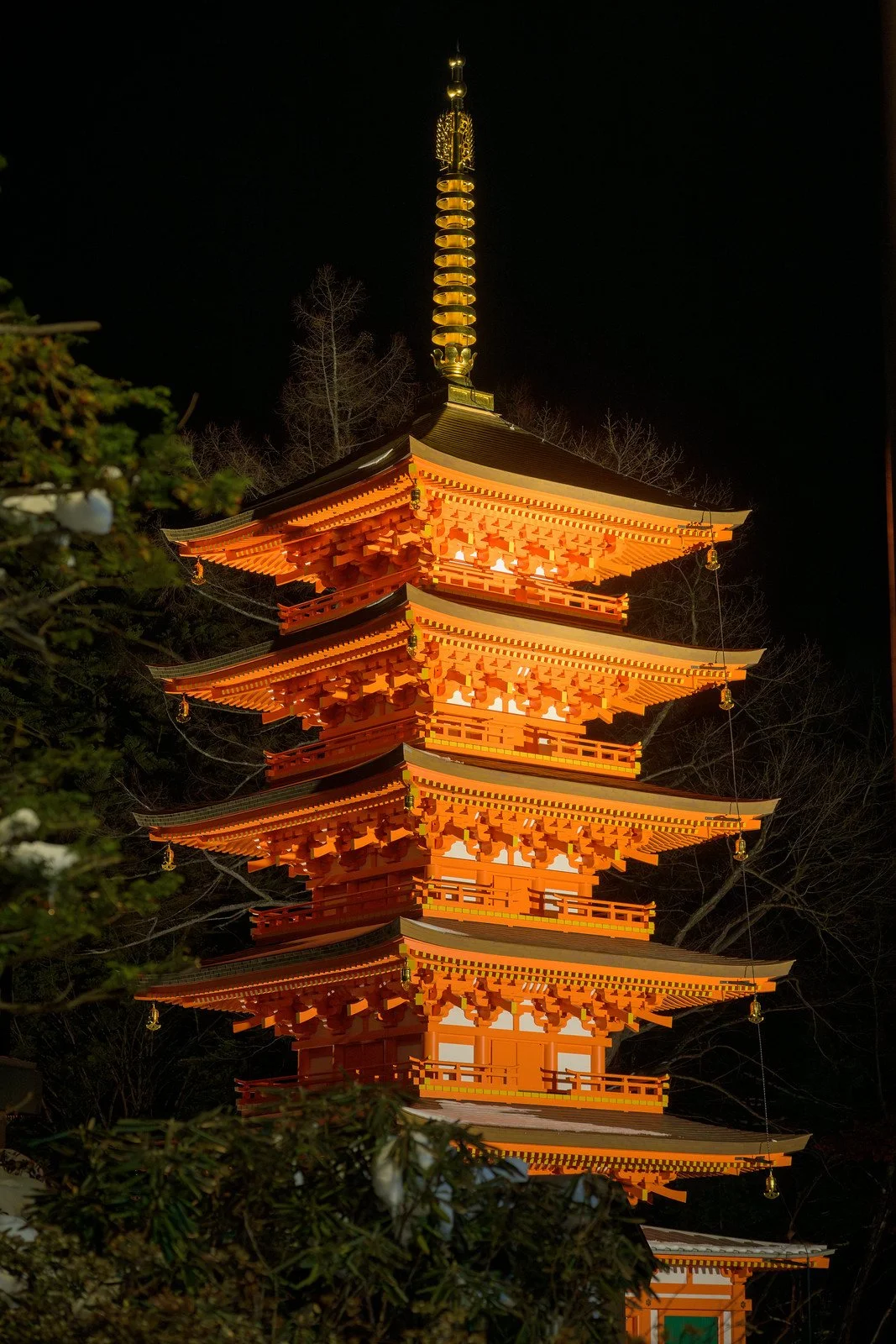
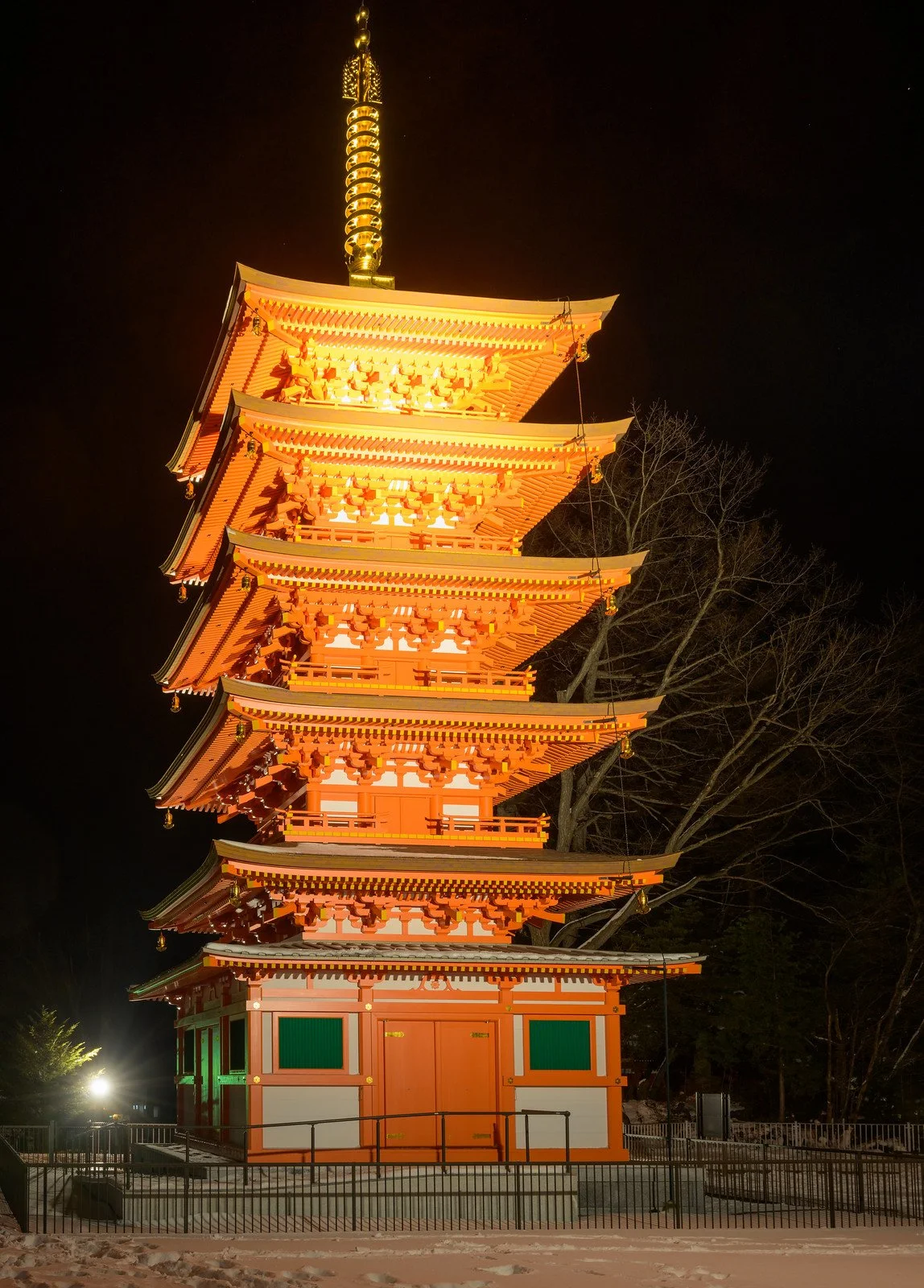
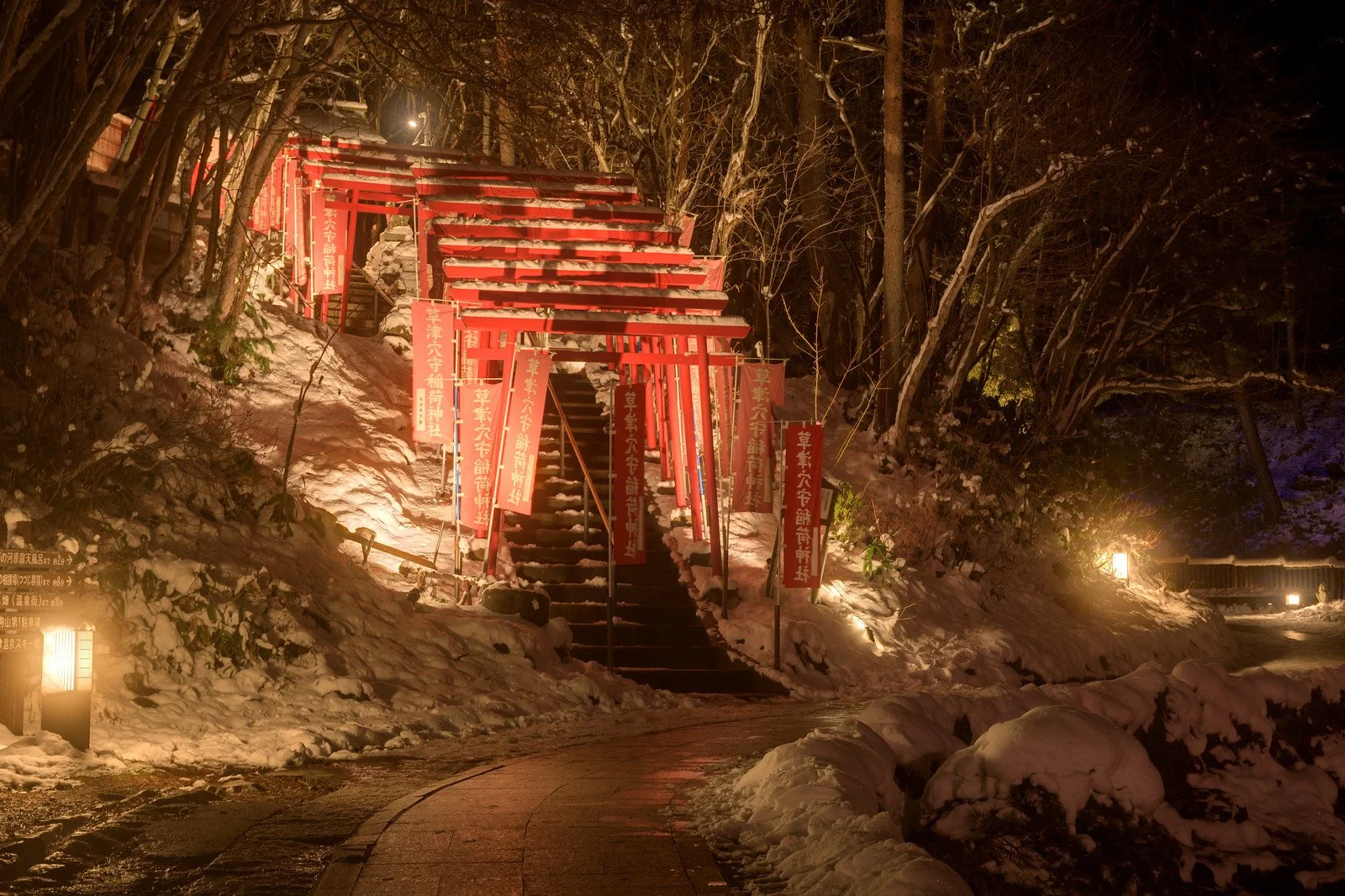
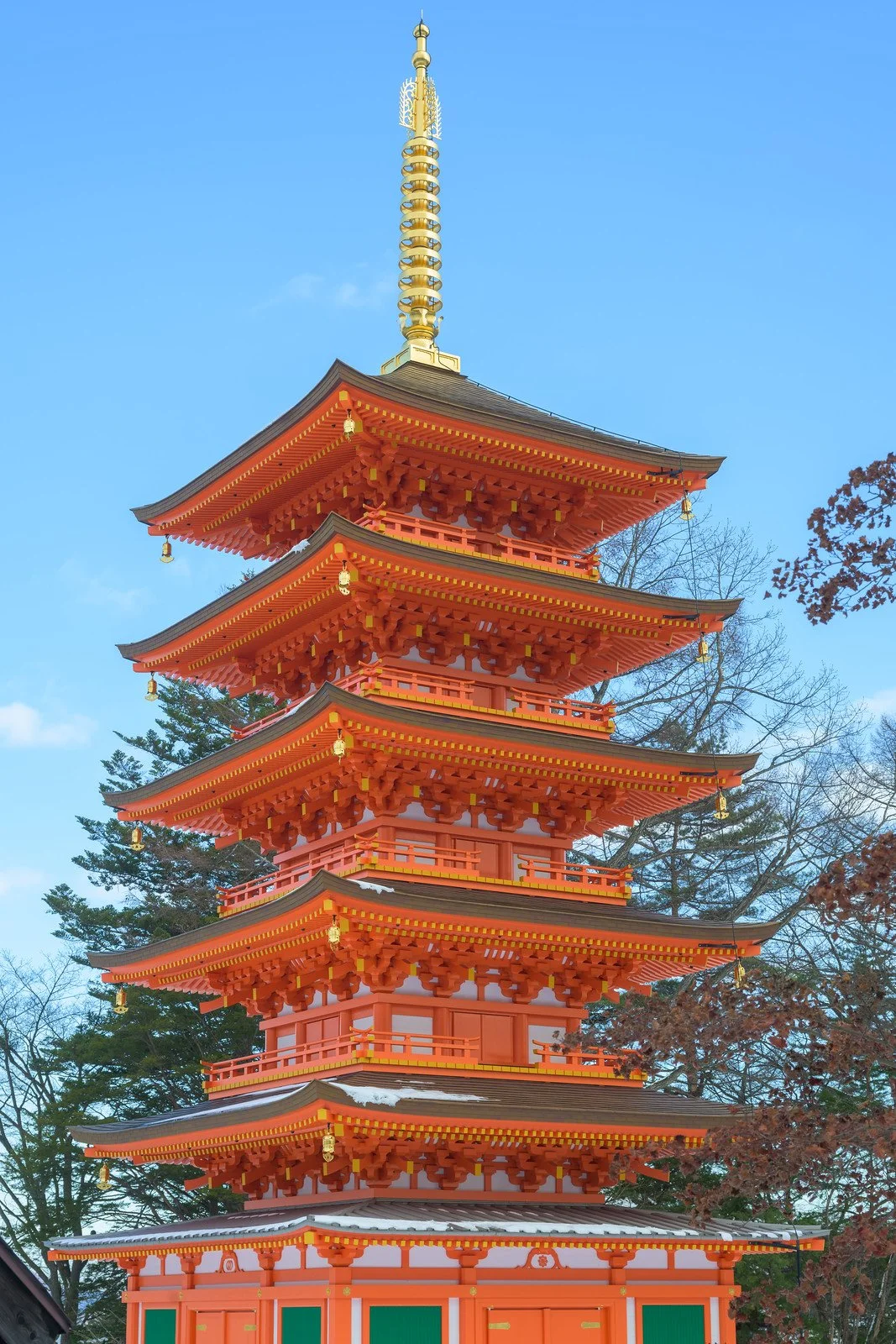
At night, the area around the temple was noticeably quieter. The five‑storey pagoda stood illuminated against the dark sky, its presence calm and grounding. With few people around, the moment felt intimate, offering a peaceful contrast to the lively Yubatake area below.
Night Stroll Through Sainokawara Park
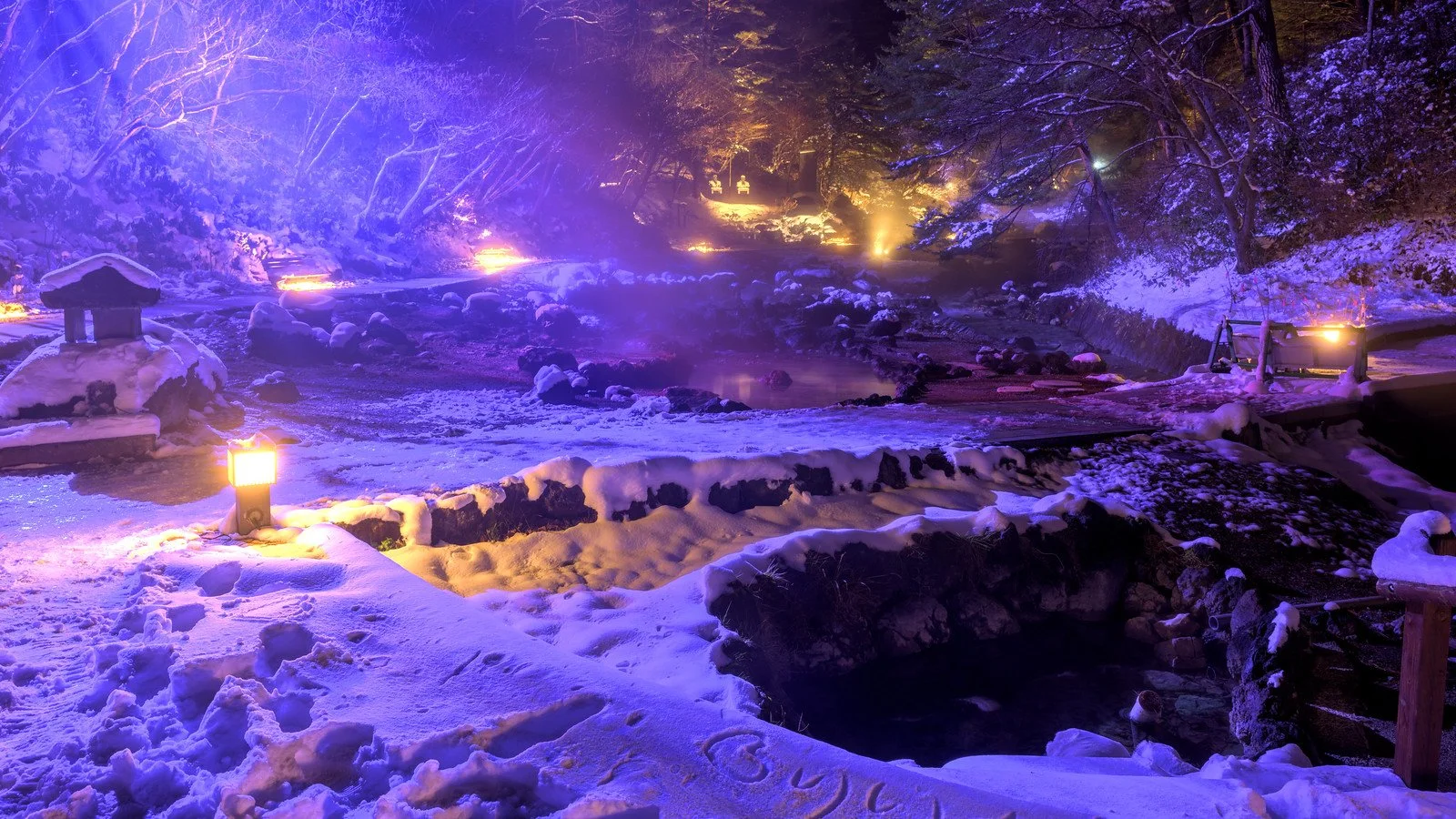
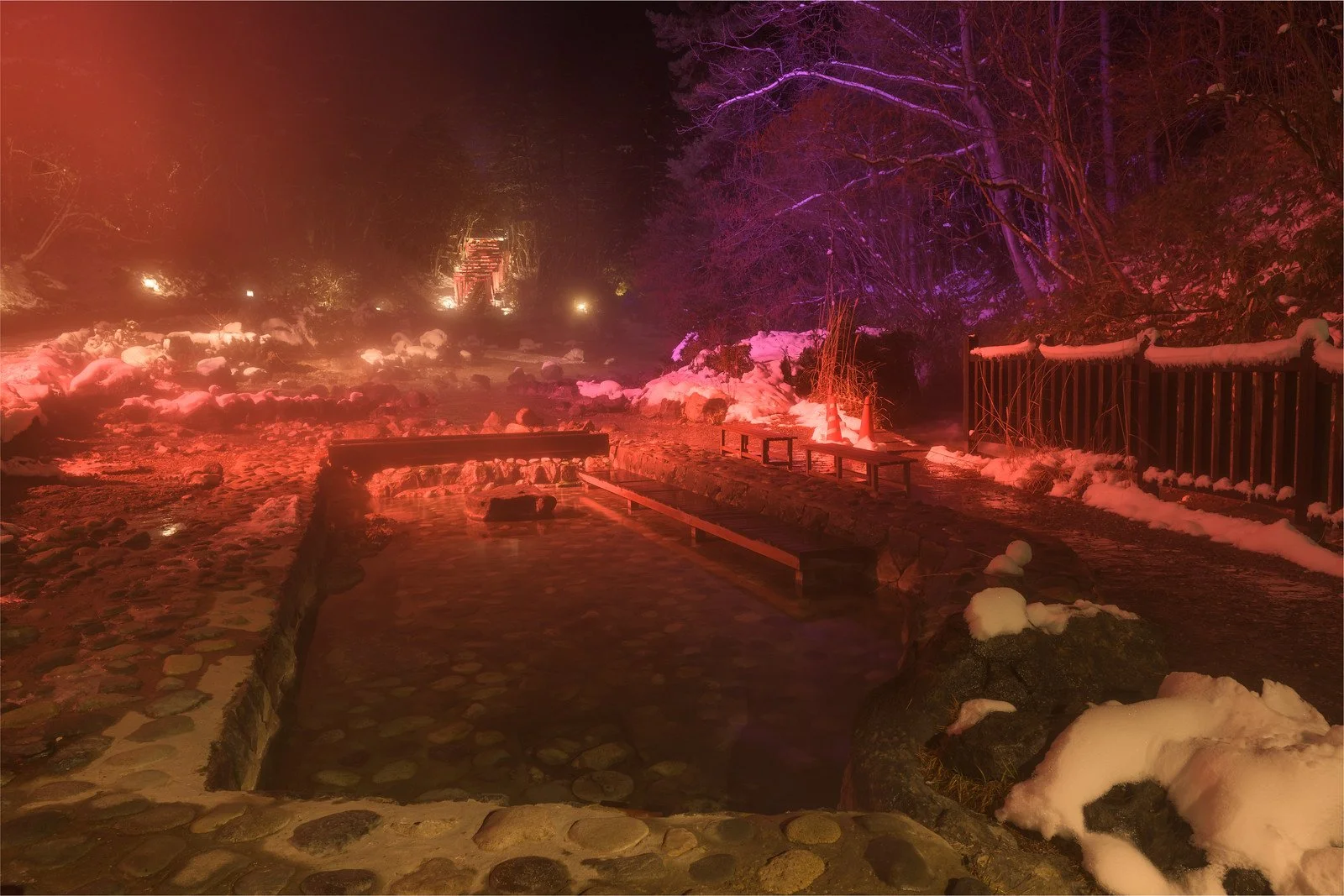
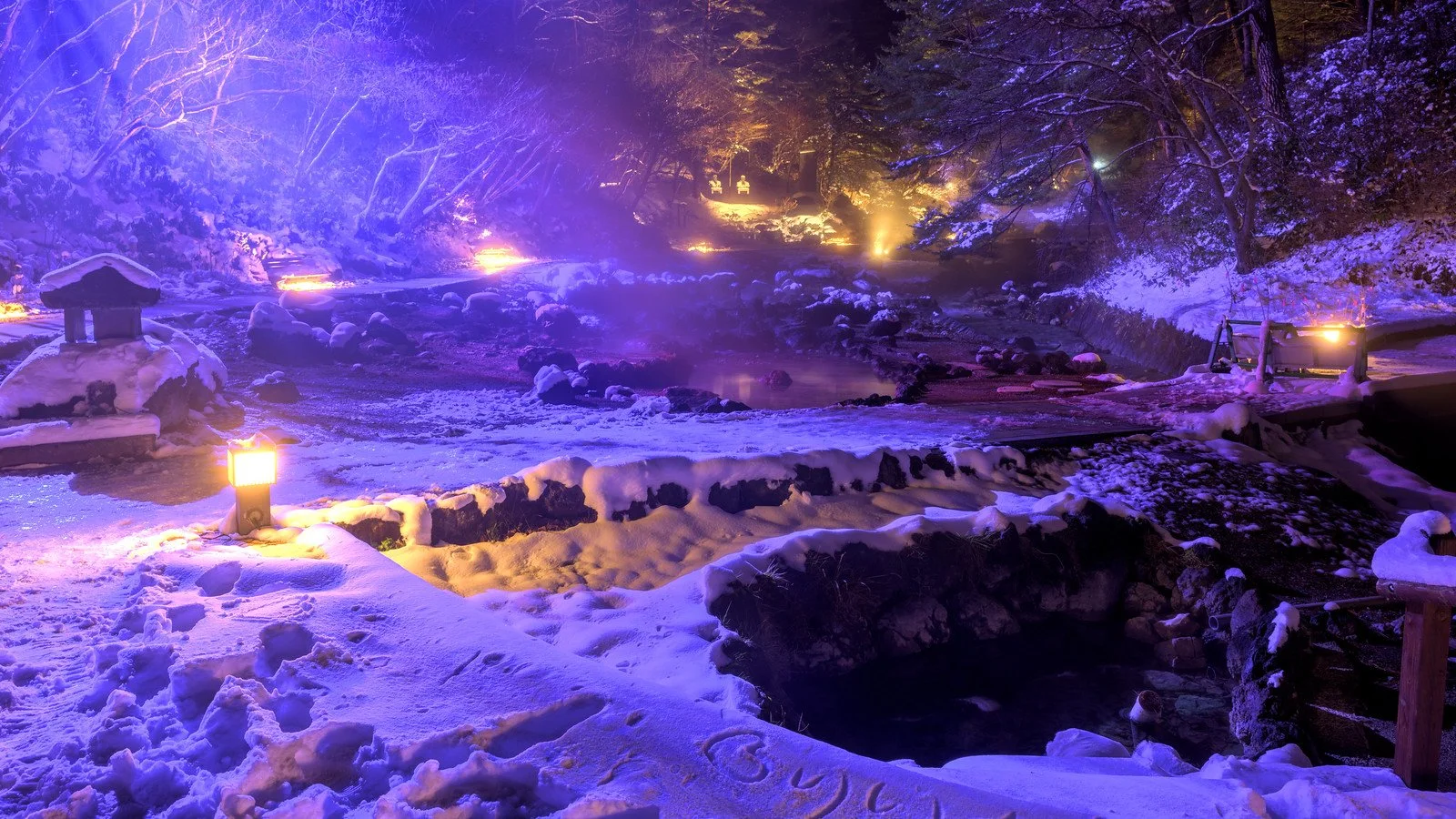
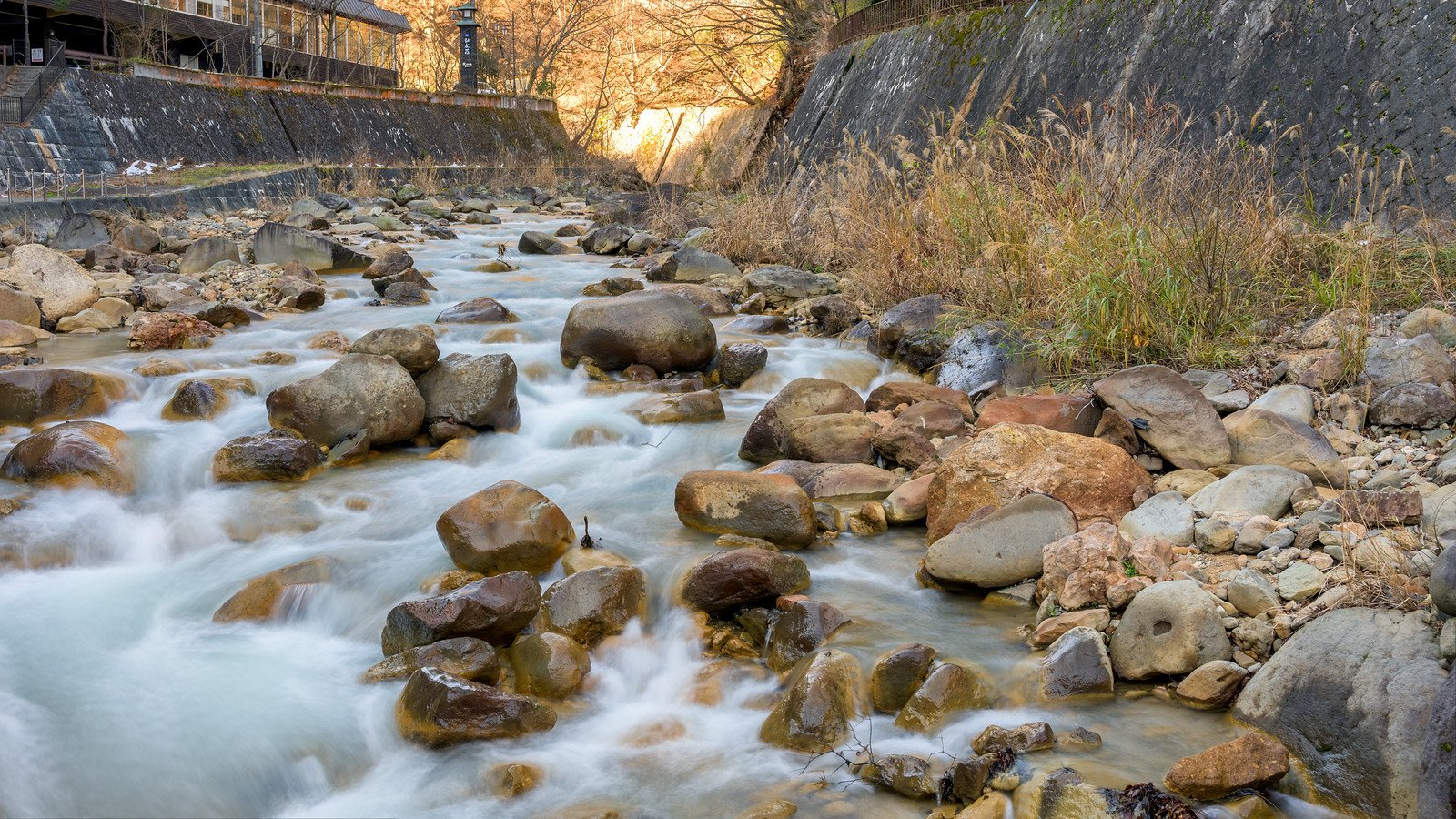
From there, we continued on to Sainokawara Park. Walking through the park at night felt both beautiful and slightly intimidating. With bear warning signs posted around the area, and knowing that bear sightings in northern Japan are more common in the early mornings and at night, the park felt unusually quiet. Very few people were around, and the combination of snow, steam rising from the streams, and soft lighting gave the park a mystical, almost otherworldly atmosphere. Walking here at night was one of the most memorable moments of our stay.
Onsen, Footbaths, and a Slow Morning
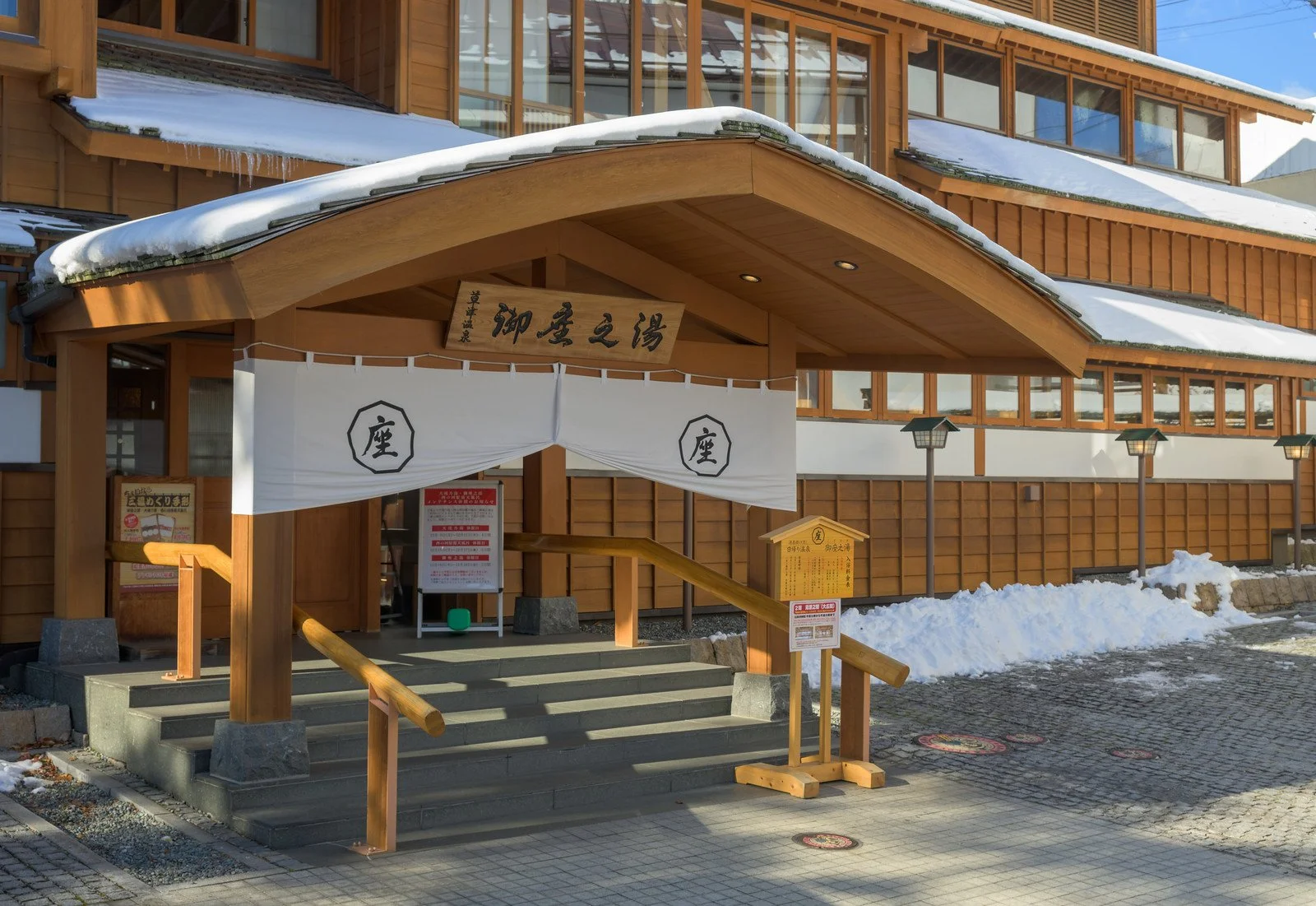
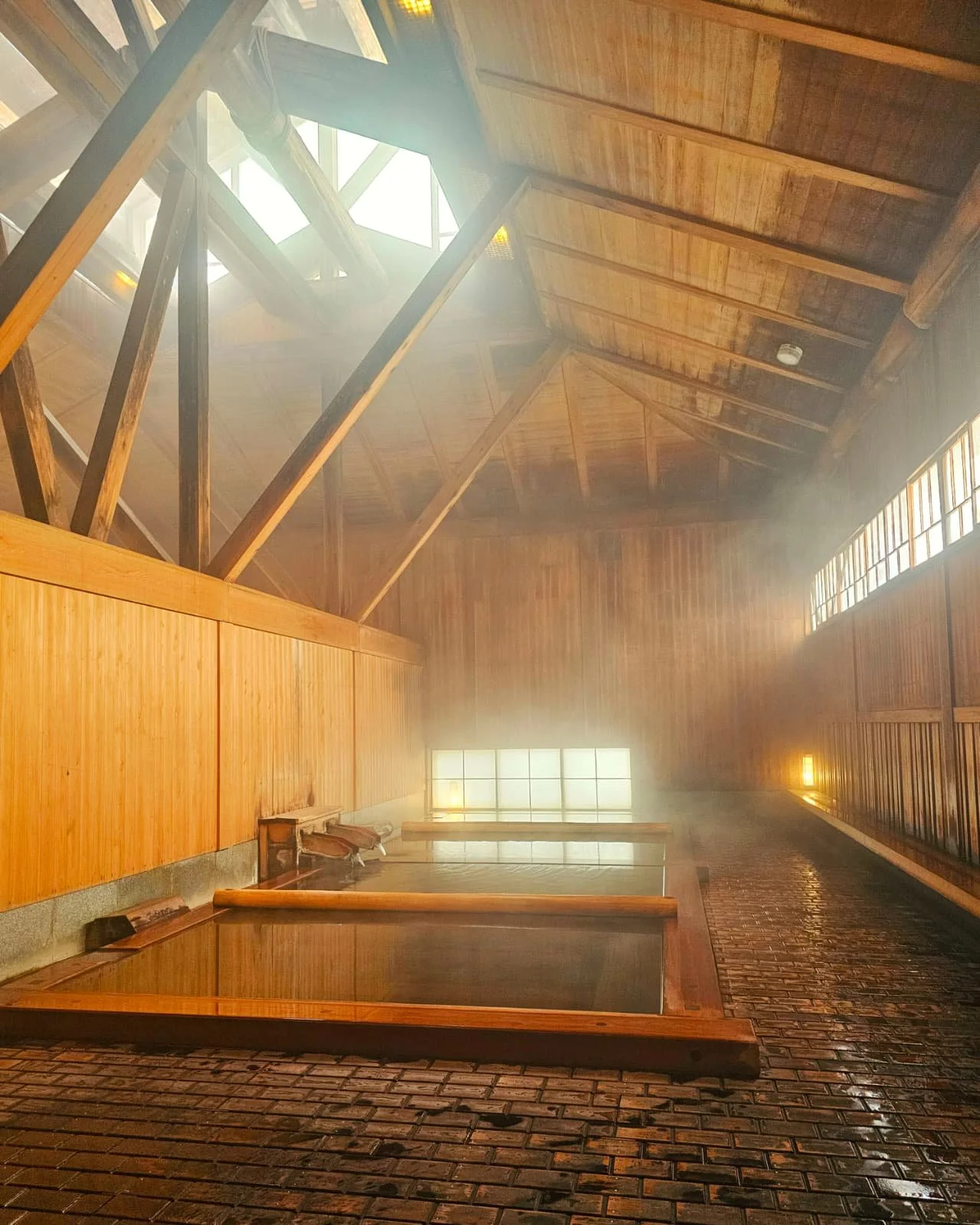
The next morning, we began our day with a visit to Gozanoyu, located right next to the Yubatake, making it one of the most convenient onsens in town. Stepping inside from the cold air, the warmth of the wooden bathhouse was instantly welcoming. Opened in 2013, Gozanoyu is a traditional style bathhouse built from wood, blending naturally with its historic surroundings. Inside, there is one stone bath and one wooden bath, which are rotated daily between genders. Each bath contains two pools, fed by different types of thermal waters.
Visiting in the early morning meant the onsen was not very crowded, as most day trippers had yet to arrive. The quiet atmosphere made the soak feel unhurried and especially enjoyable. After bathing, we spent some time relaxing upstairs in the large tatami room before heading back out. Its a perfect spot to get some uninterrupted views of Yubutake from above ground level
Gozanoyu details
Hours: 7:00 to 21:00, entry until 20:30. From December to March, opening is from 8:00
Admission: Prices: Adults 900 Yen, Children 450 Yen (ages 3–12)
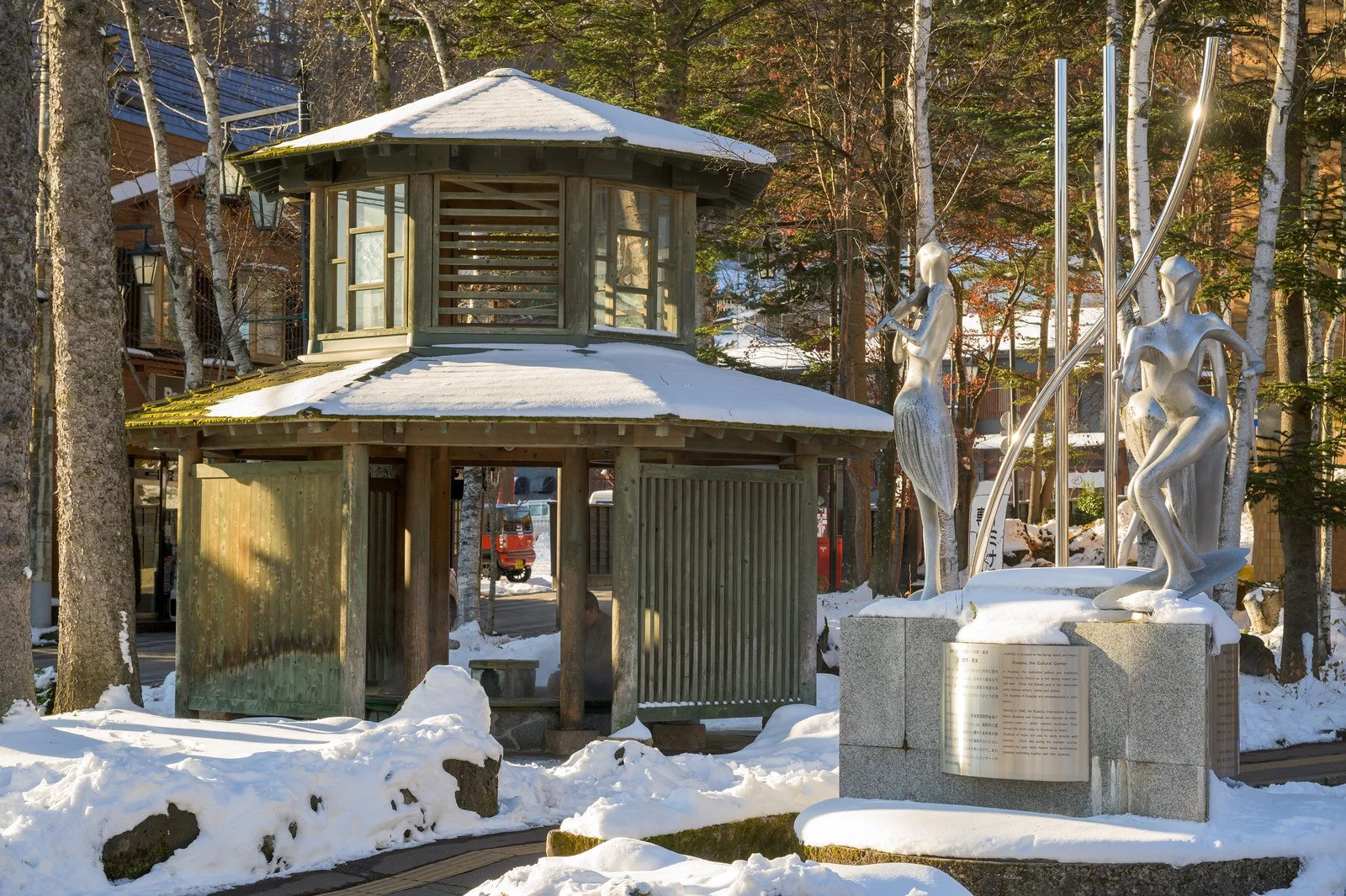
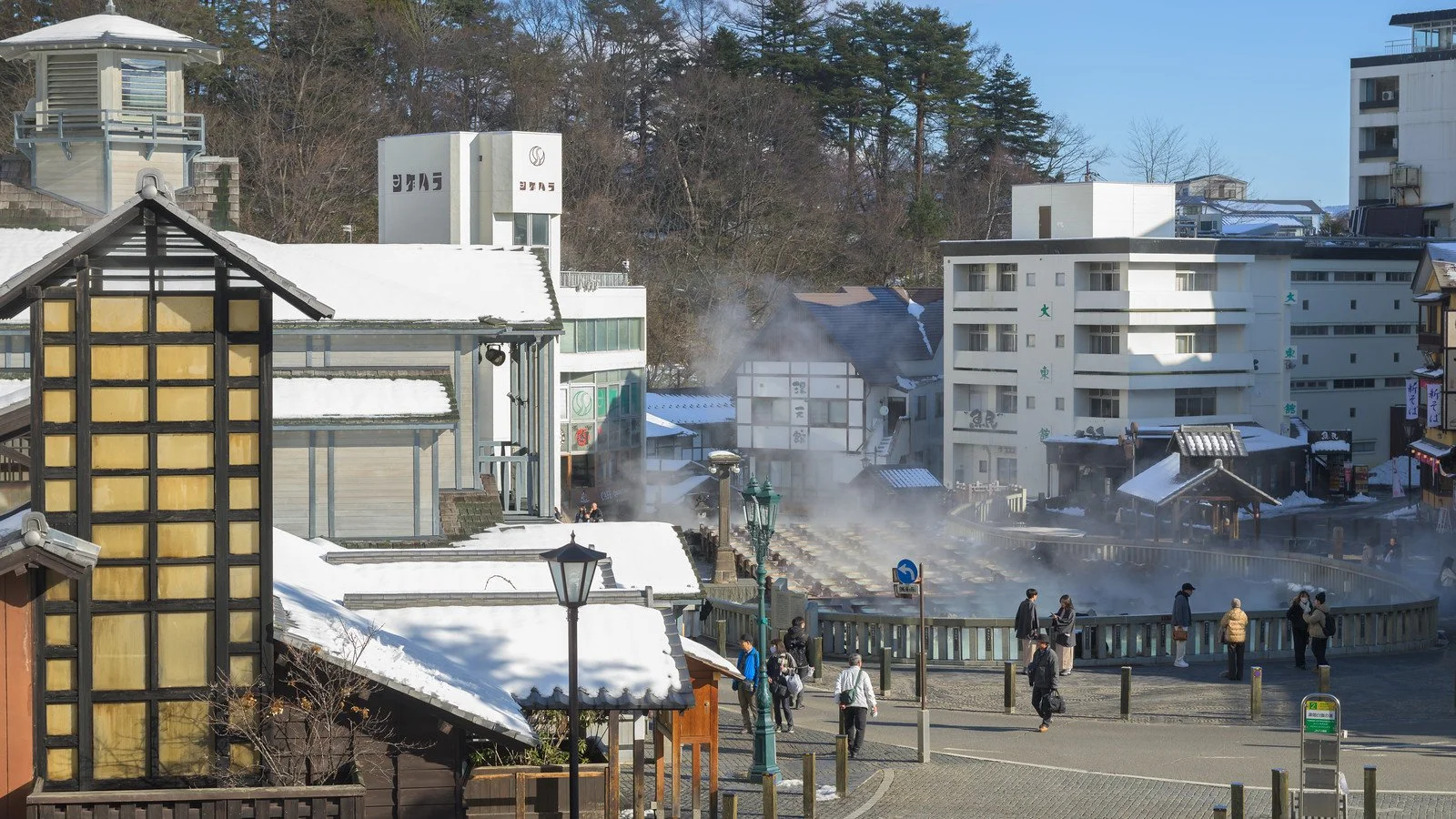
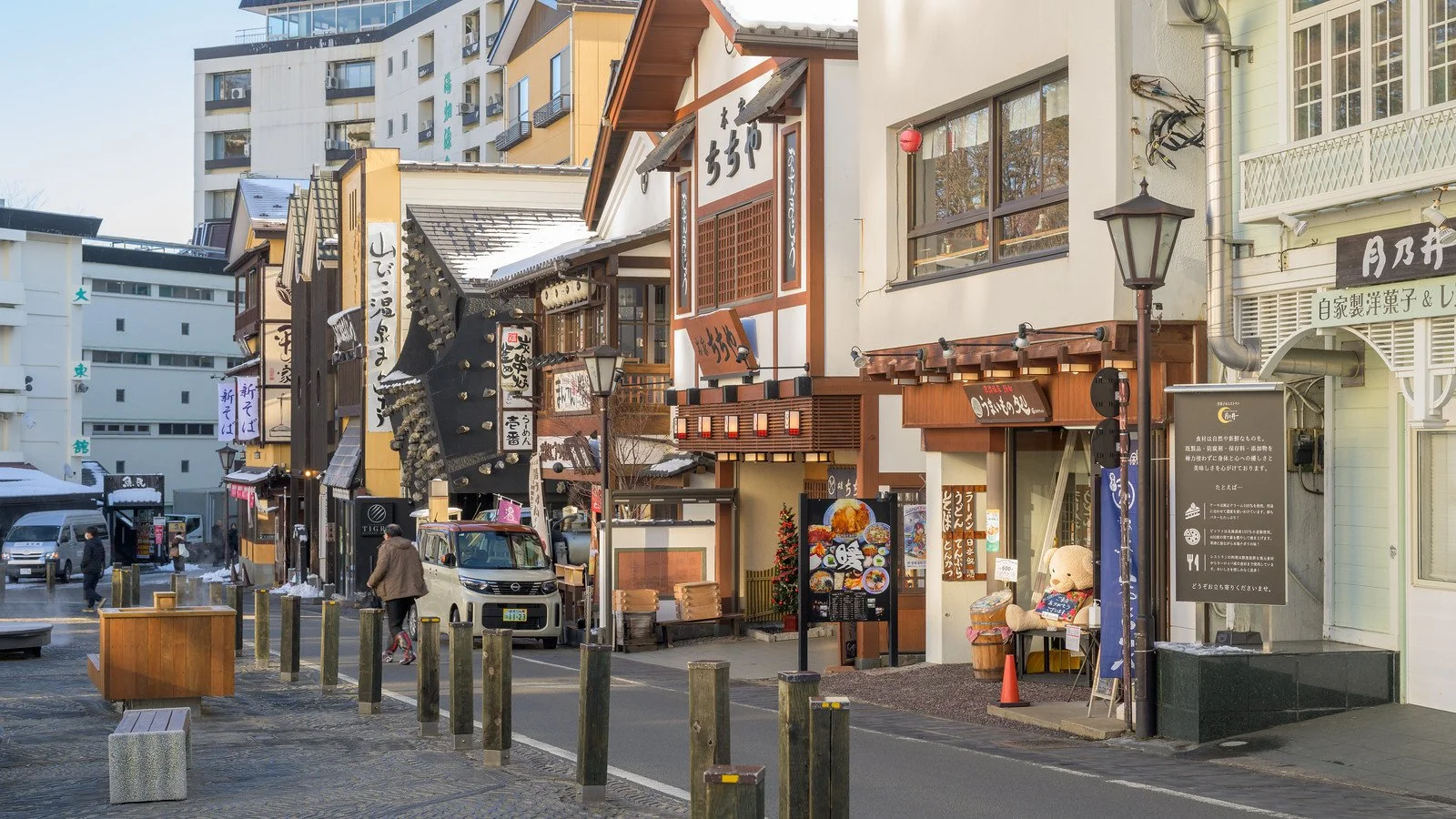
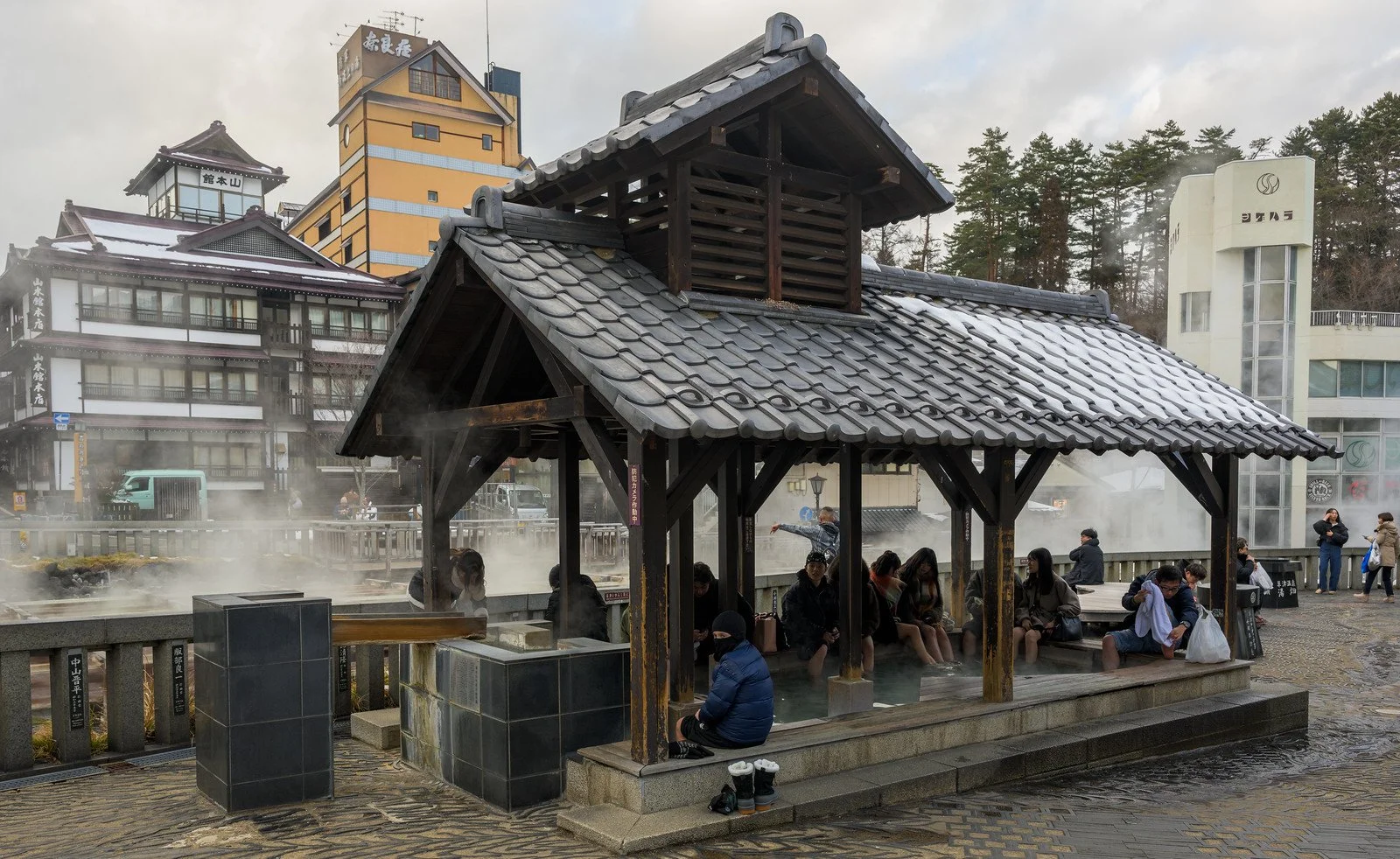
Yubatake in the Morning and the Tradition of Yumomi
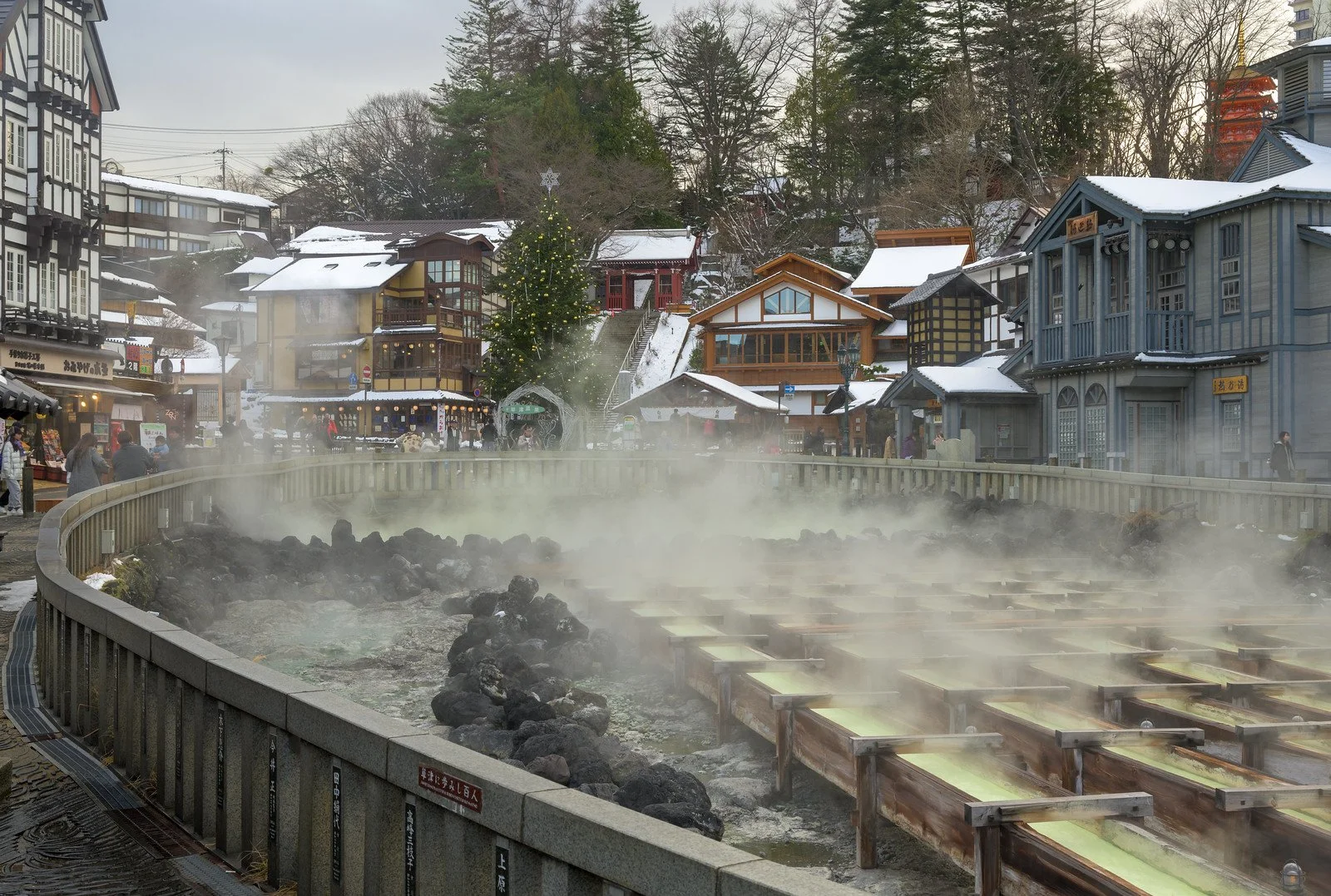
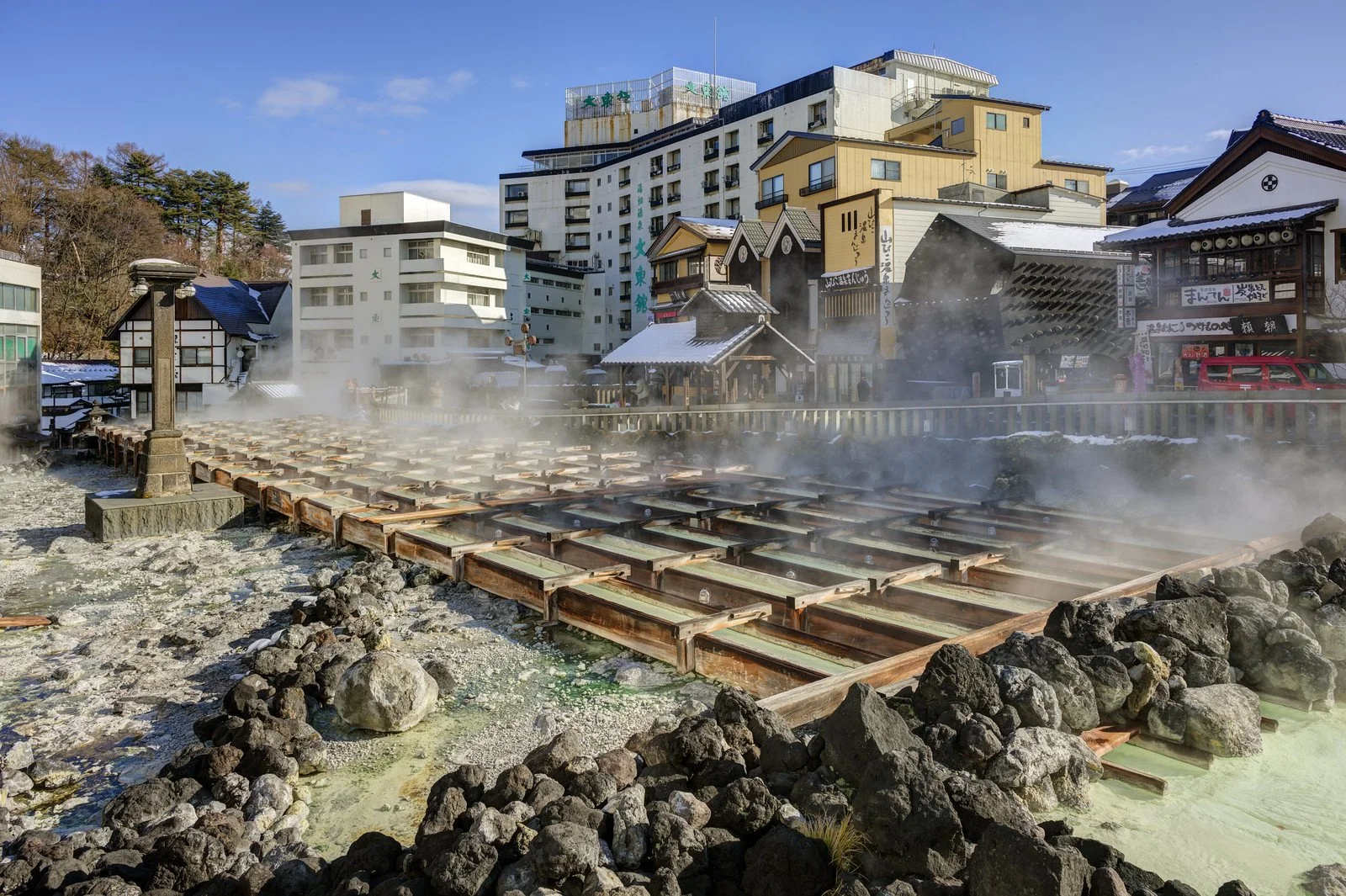
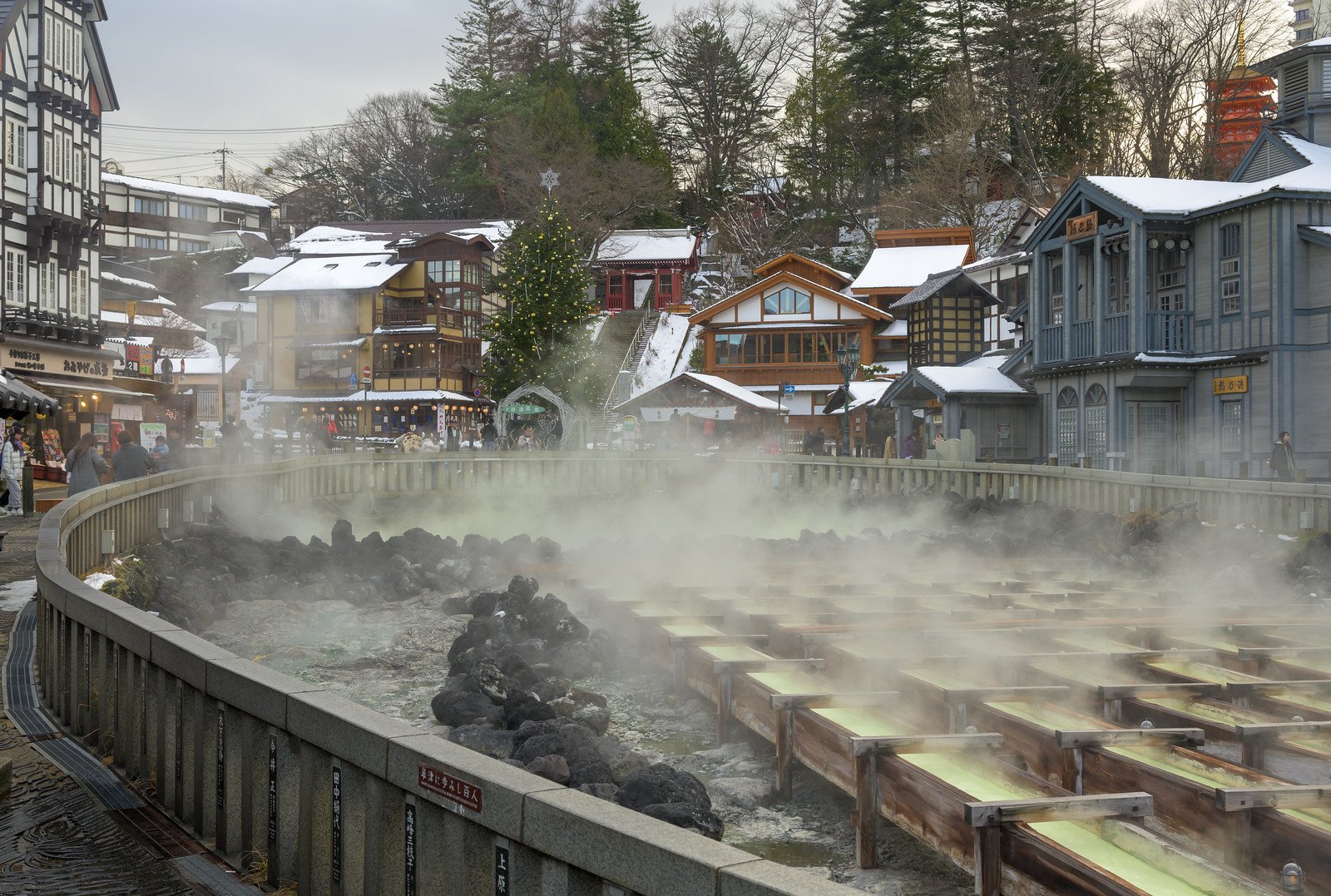
In the morning, Yubatake feels very different from the night before. With clearer skies and fewer people around, the constant flow of hot spring water becomes easier to appreciate. Thick steam rises from the wooden channels, and the sound of flowing water fills the air.
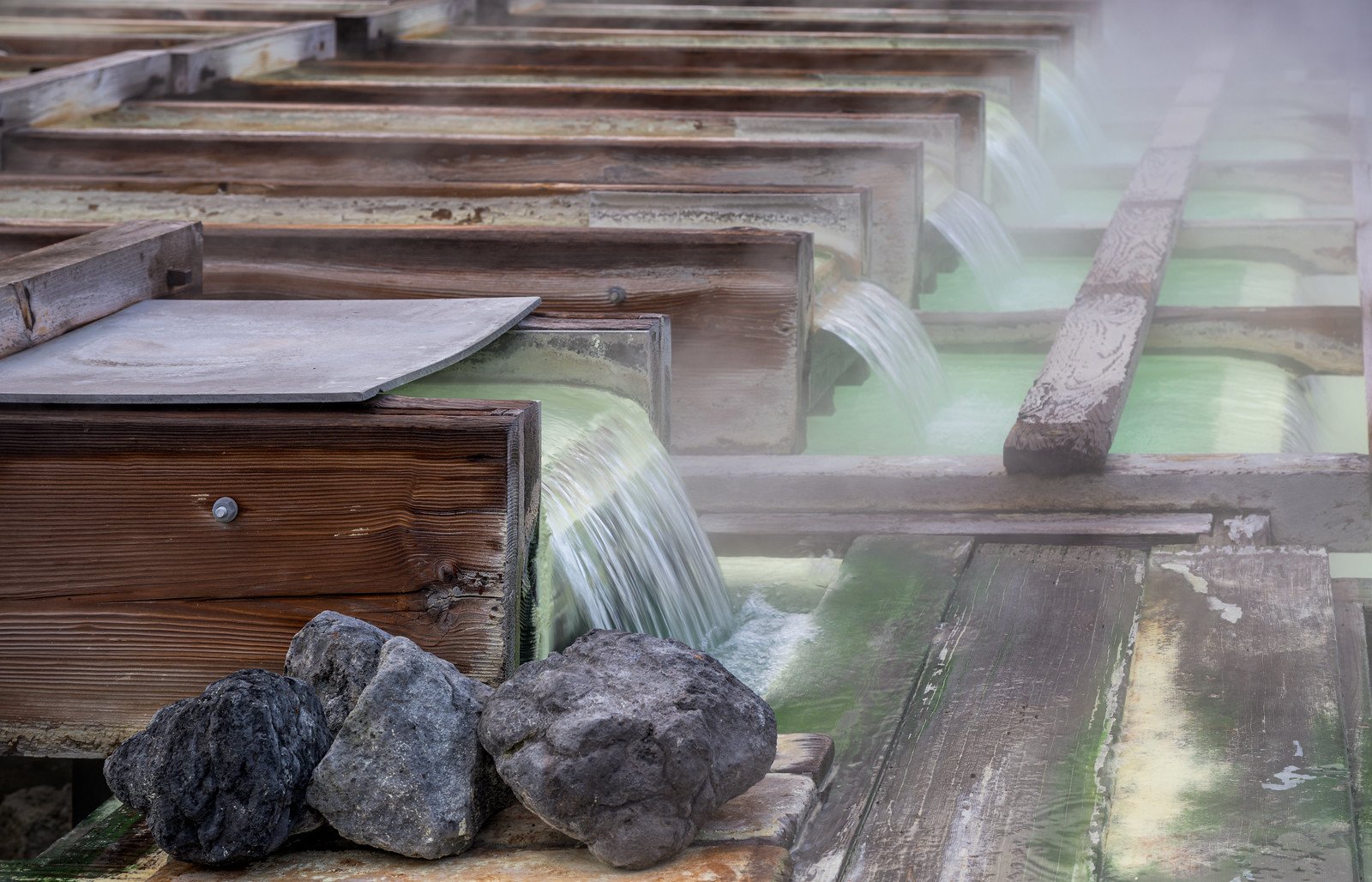
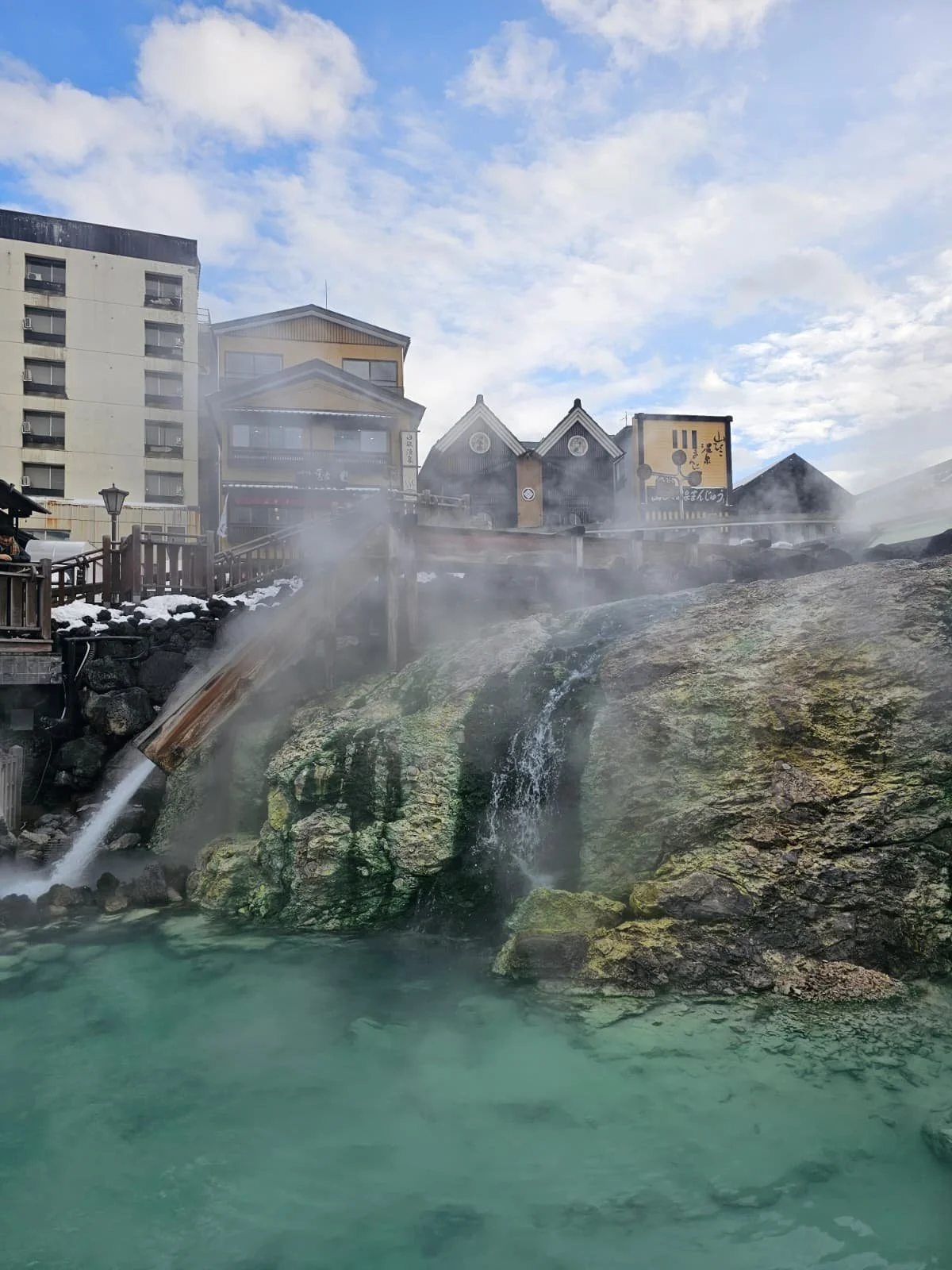
Yubatake, meaning “hot water field,” is the symbolic heart of Kusatsu Onsen. Here, naturally hot spring water emerges at temperatures of around 50 to 90°C, far too hot for bathing. To cool it naturally, the water is guided through a series of wooden boxes and channels, allowing heat to dissipate as it flows. This process also helps preserve the mineral content of the water without adding cold water, something Kusatsu has long been proud of.
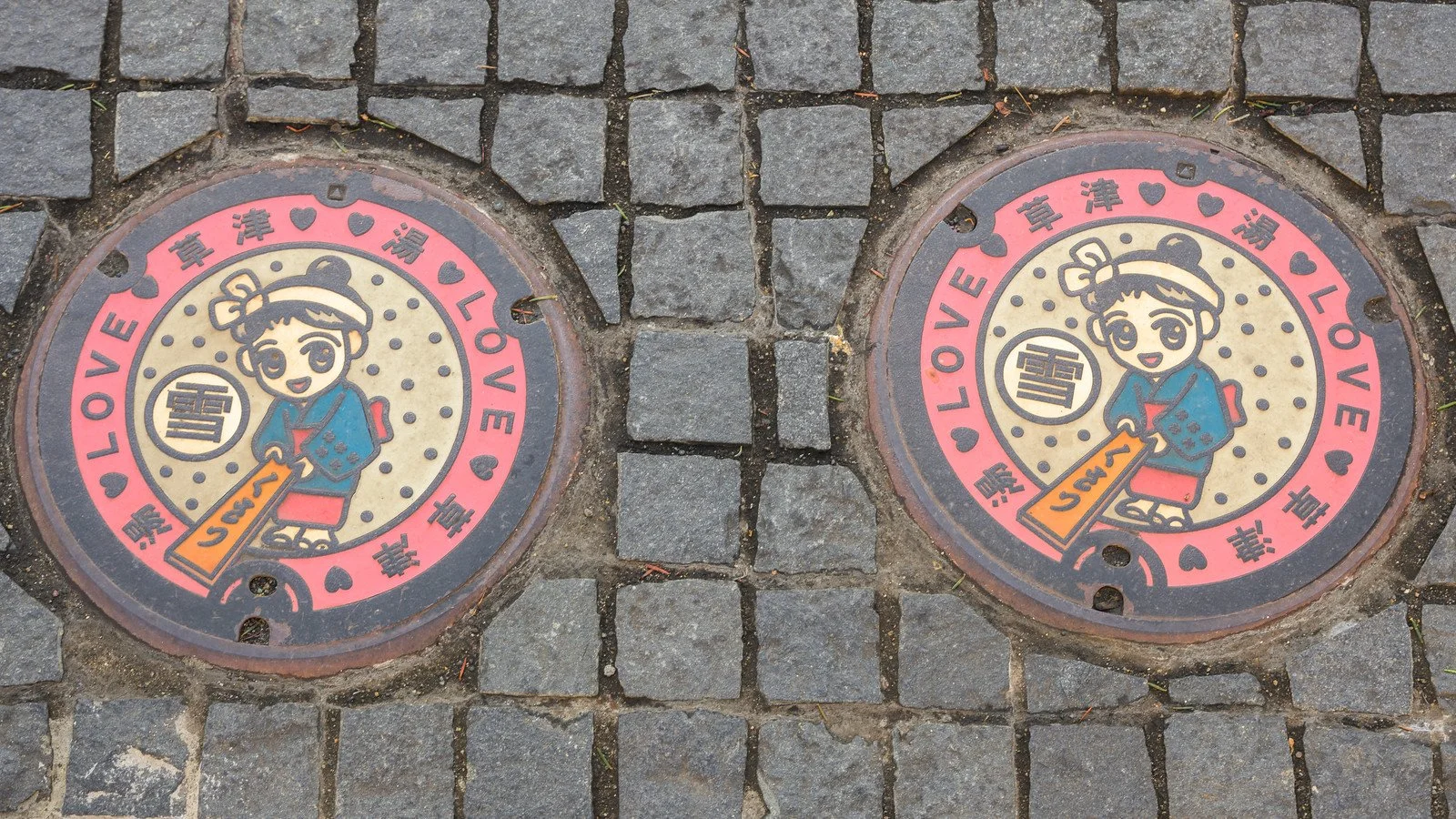
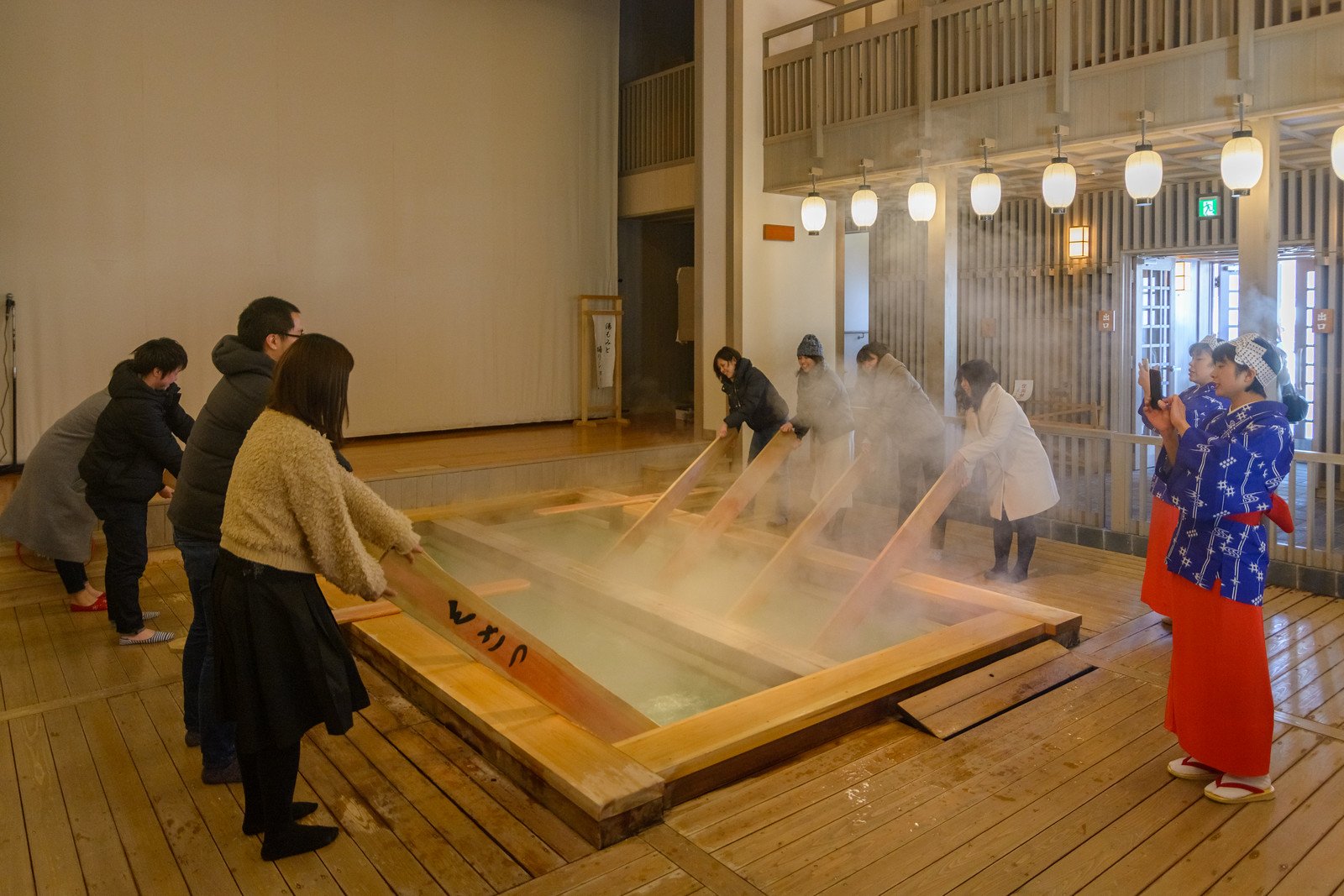
One of the most famous traditions connected to Yubatake is Yumomi (湯もみ). Rather than diluting the hot spring water, large wooden paddles are used to stir and fold the water, gradually lowering the temperature while keeping its mineral strength intact. The movement is rhythmic and deliberate, often performed alongside traditional folk songs. Yumomi performances are held daily in the Netsunoyu building next to the Yubutake. They last around half an hour and some audience members have the opportunity to partake in the stirring, which is a great way to experience it. While we didn’t take part in Yumomi on this visit, we had experienced it on our previous trip, and it remains one of the most distinctive cultural practices in Kusatsu.
Seeing Yubatake in daylight, with its flowing water, wooden structures, and rising steam, made it clear why it has remained the centre of the town for centuries. It isn’t just a landmark, but a living system that defines how Kusatsu Onsen works. Also this place was awarded
Sainokawara Park in the Morning
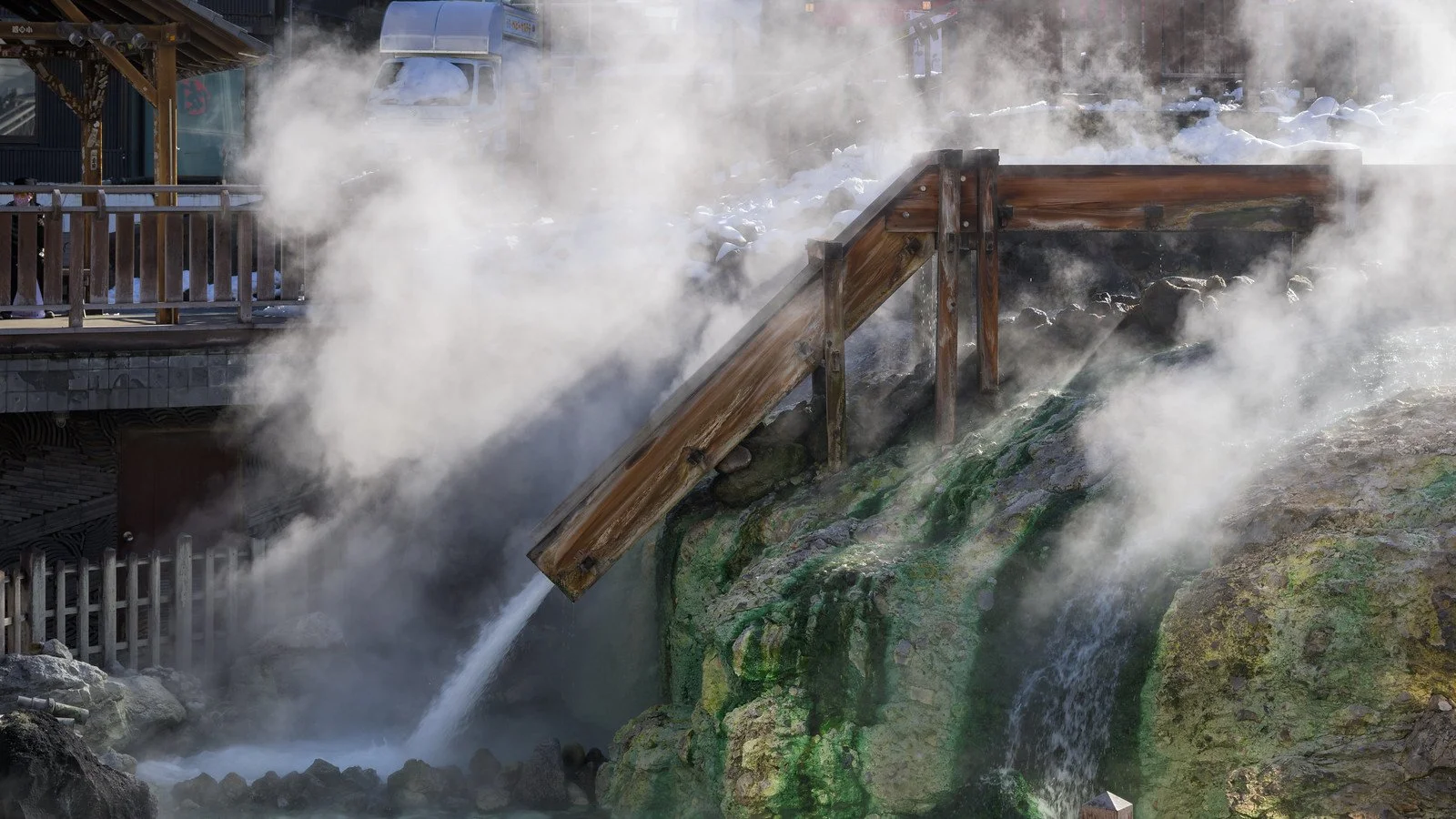
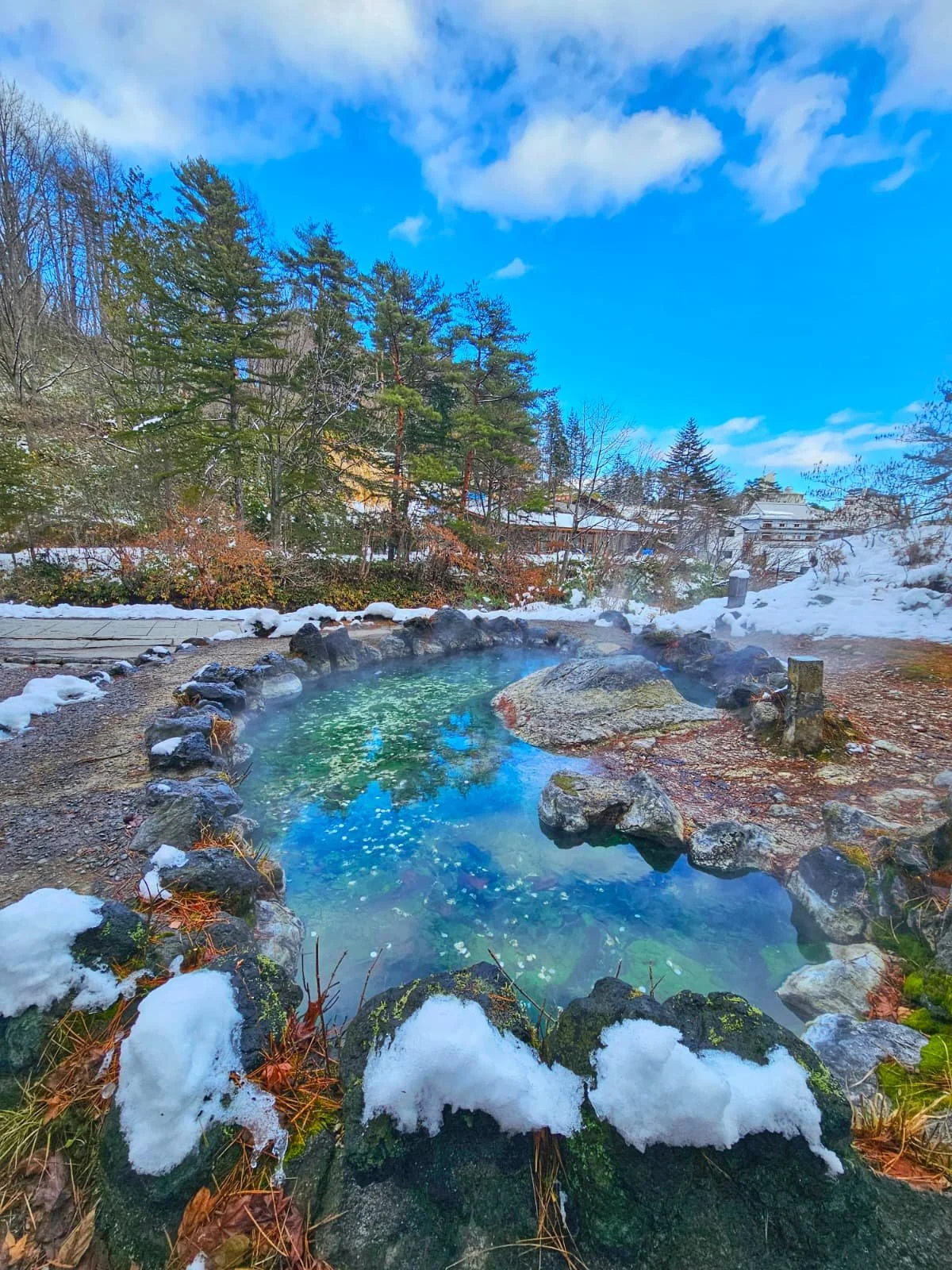
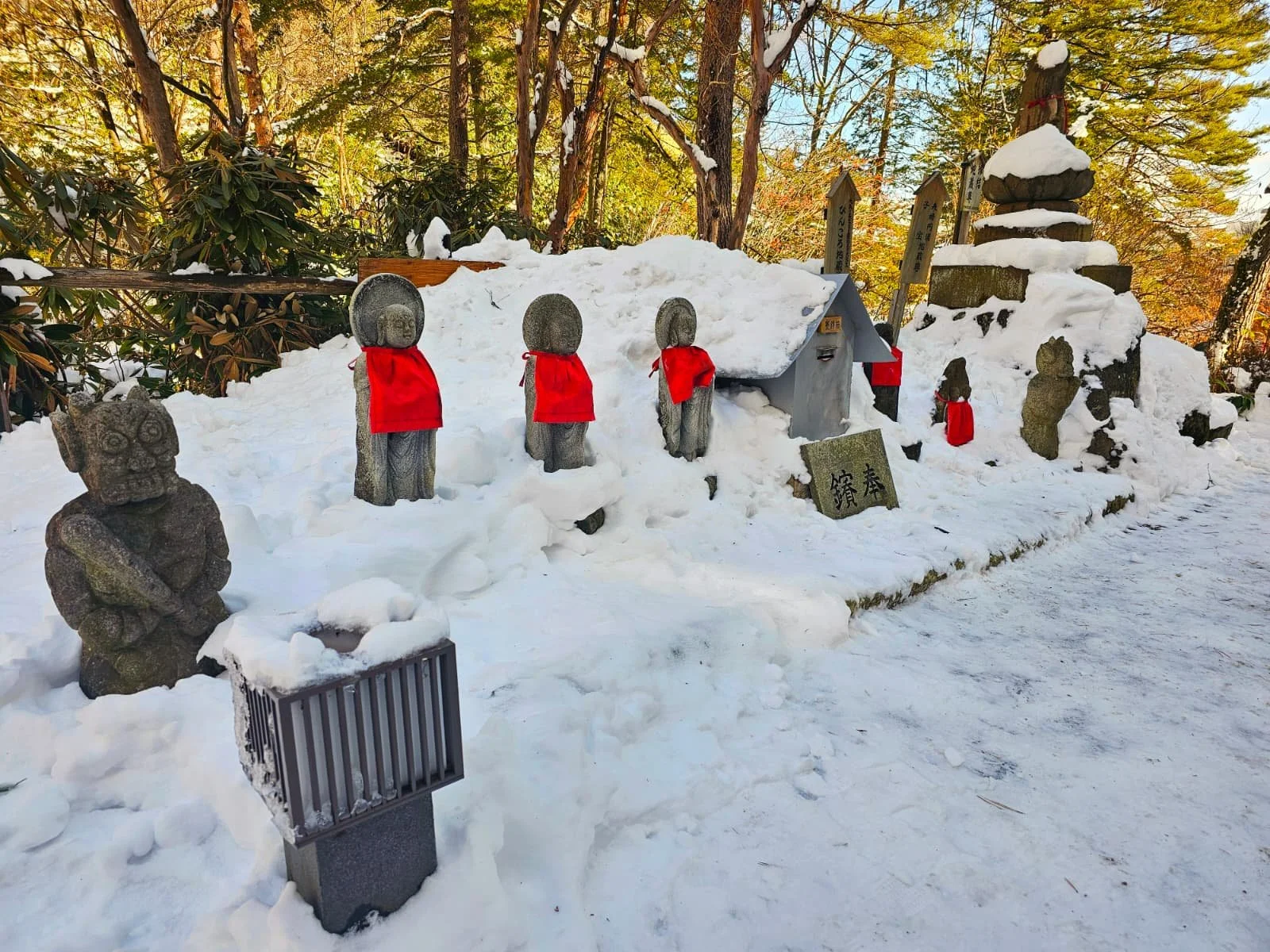
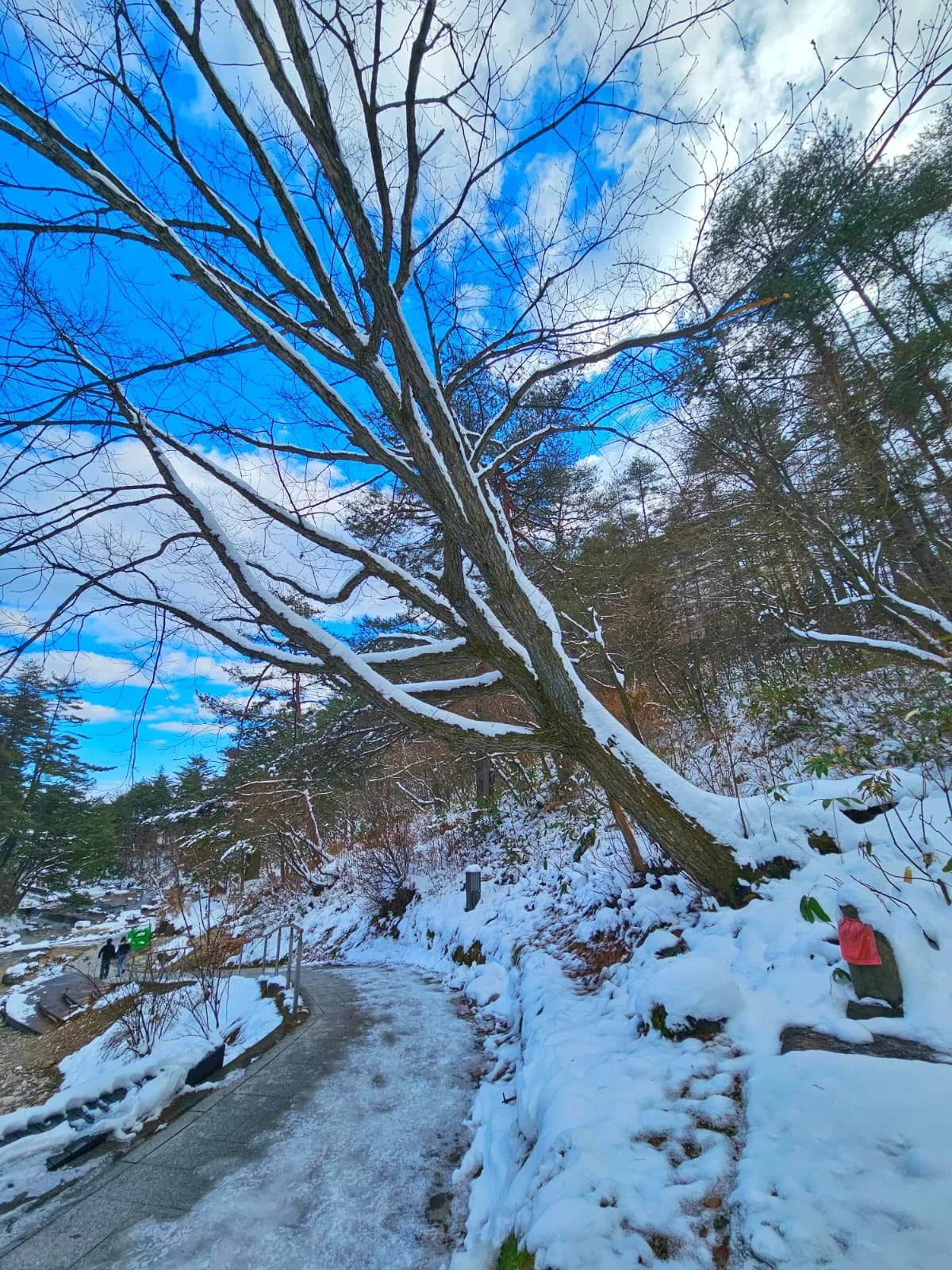
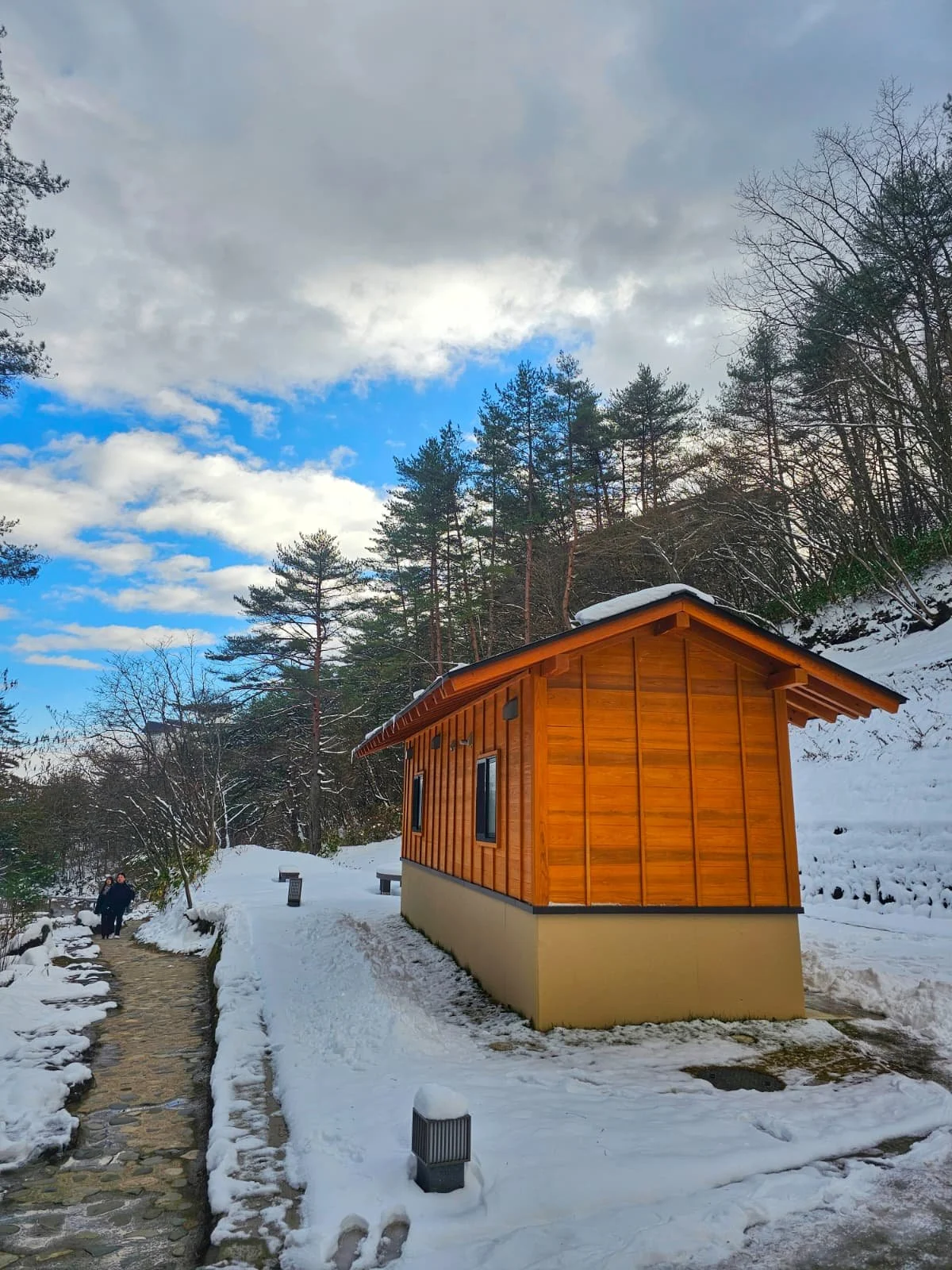
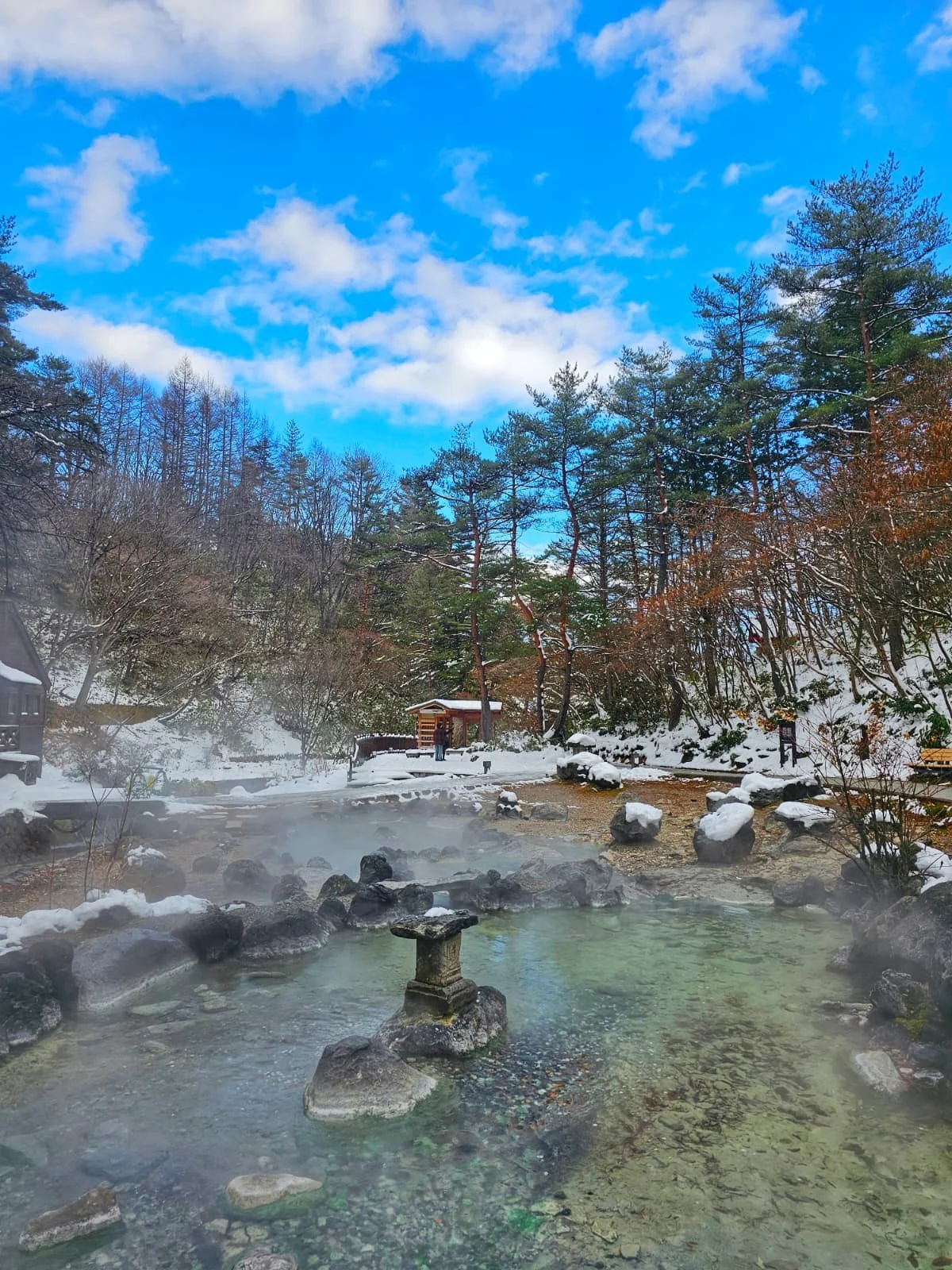
Later that morning, we returned to Sainokawara Park, which felt completely different in daylight. The skies had cleared to a bright blue, and with the sun overhead, the streams of steaming hot spring water were even more striking against the snow. There were noticeably more people than the night before, with visitors stopping to take photos and enjoy the warmth of the park. Unfortunately, the Sainokawara Rotenburo was closed for maintenance during our visit, so we were unable to try it. Instead, we wandered slowly through the park, soaking our feet in the free footbaths scattered throughout the area. Even without the rotenburo, these simple moments of warmth, paired with the crisp winter air, were more than enough.
Food in Kusatsu: Comforting Bites and Warm Encounters
Food became a quiet highlight of our stay in Kusatsu, often tied to small, memorable moments rather than carefully planned meals.
On our first evening, before heading toward Sainokawara Park, we stopped for dinner and made our own okonomiyaki. Simple, warming, and deeply comforting, it was the perfect meal for a cold winter night and gave us the energy to continue exploring after dark.
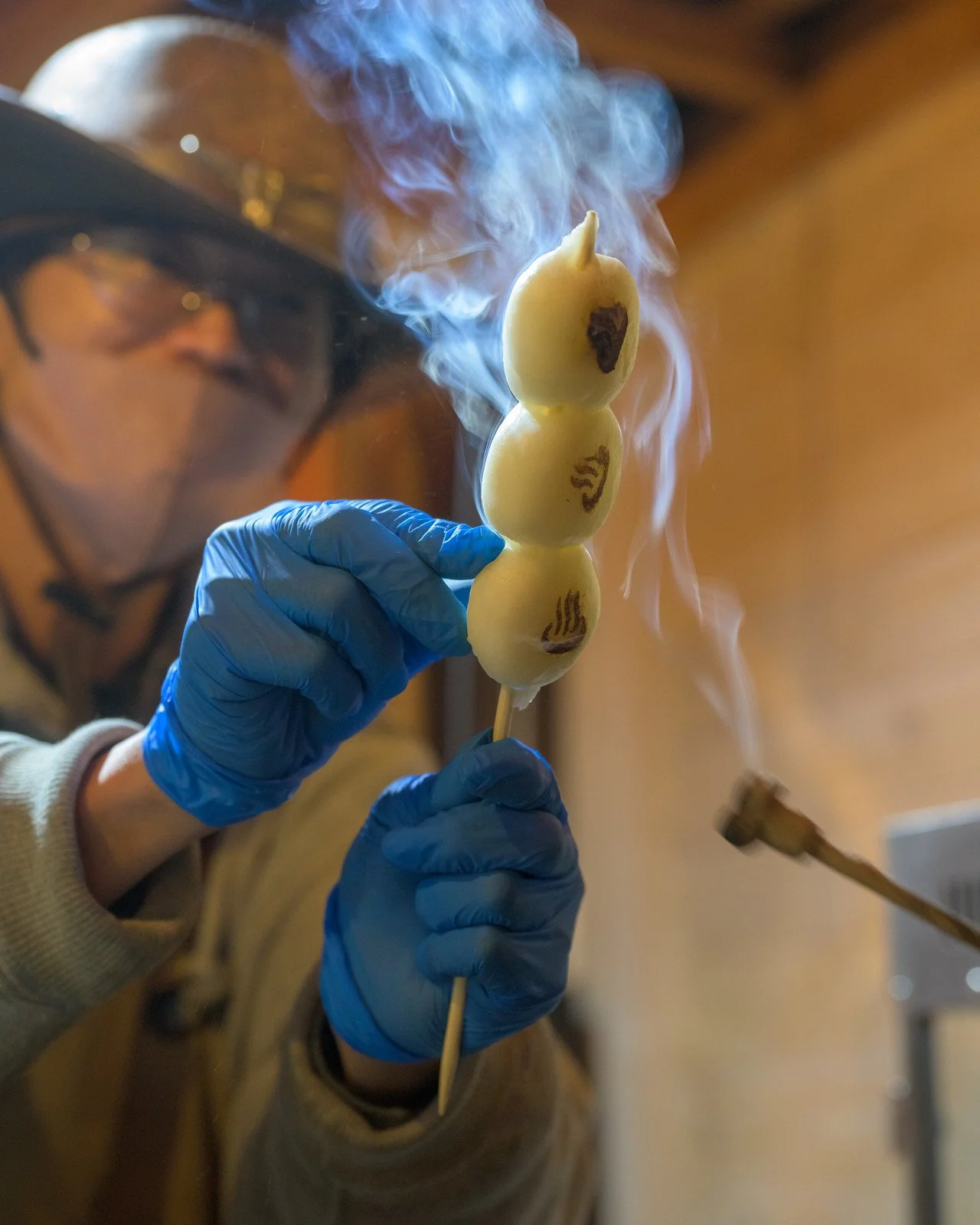
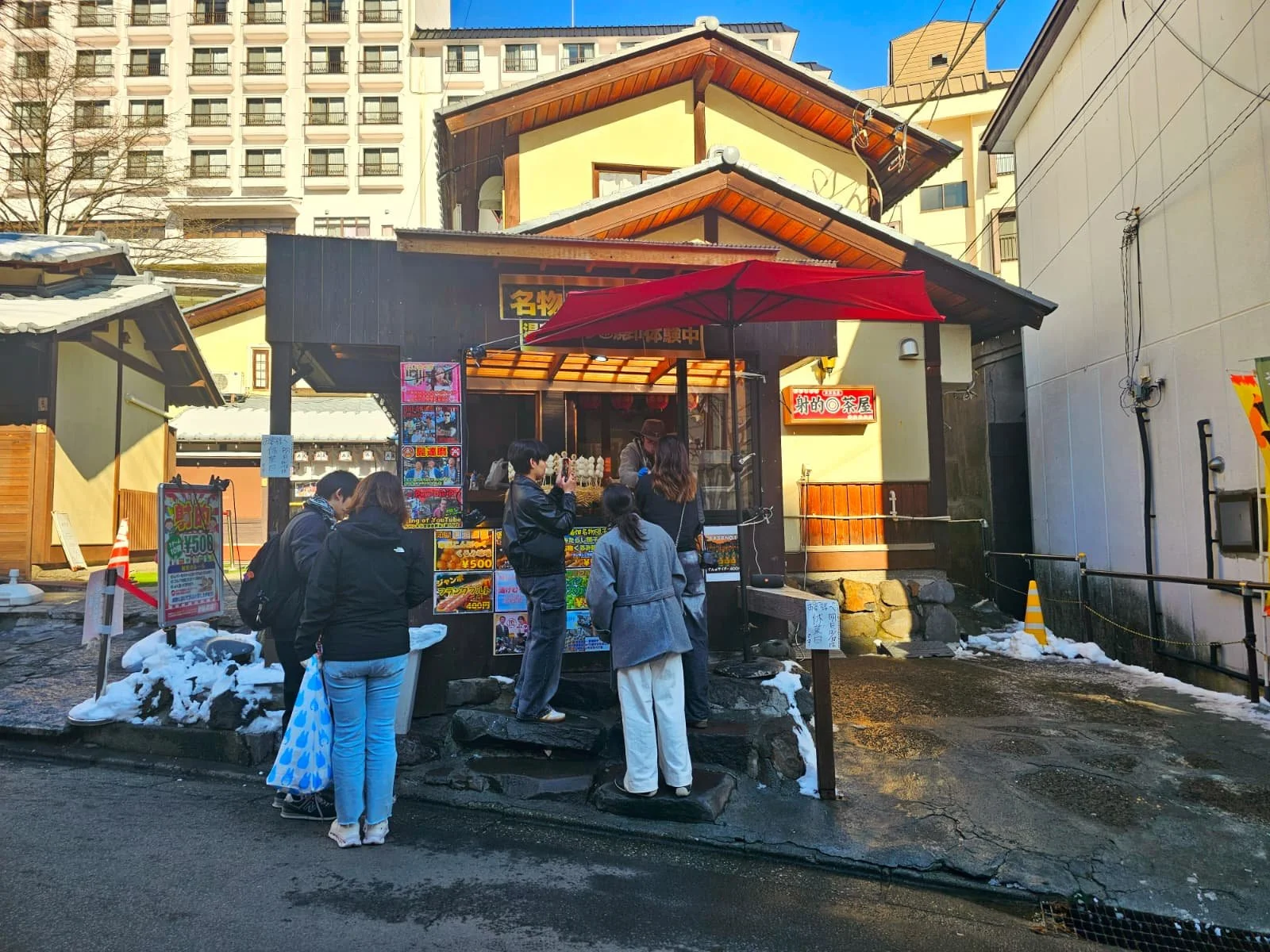
Later that same night, after returning from Sainokawara Park, we picked up miso walnut dango from a small shop along one of Kusatsu’s quiet streets. The owner was incredibly kind and encouraged us to stamp the dango with an onsen icon, turning a simple snack into a playful experience. He even put on cheerful, Christmassy music, which echoed softly through the otherwise calm streets and added warmth and lightheartedness to the night.
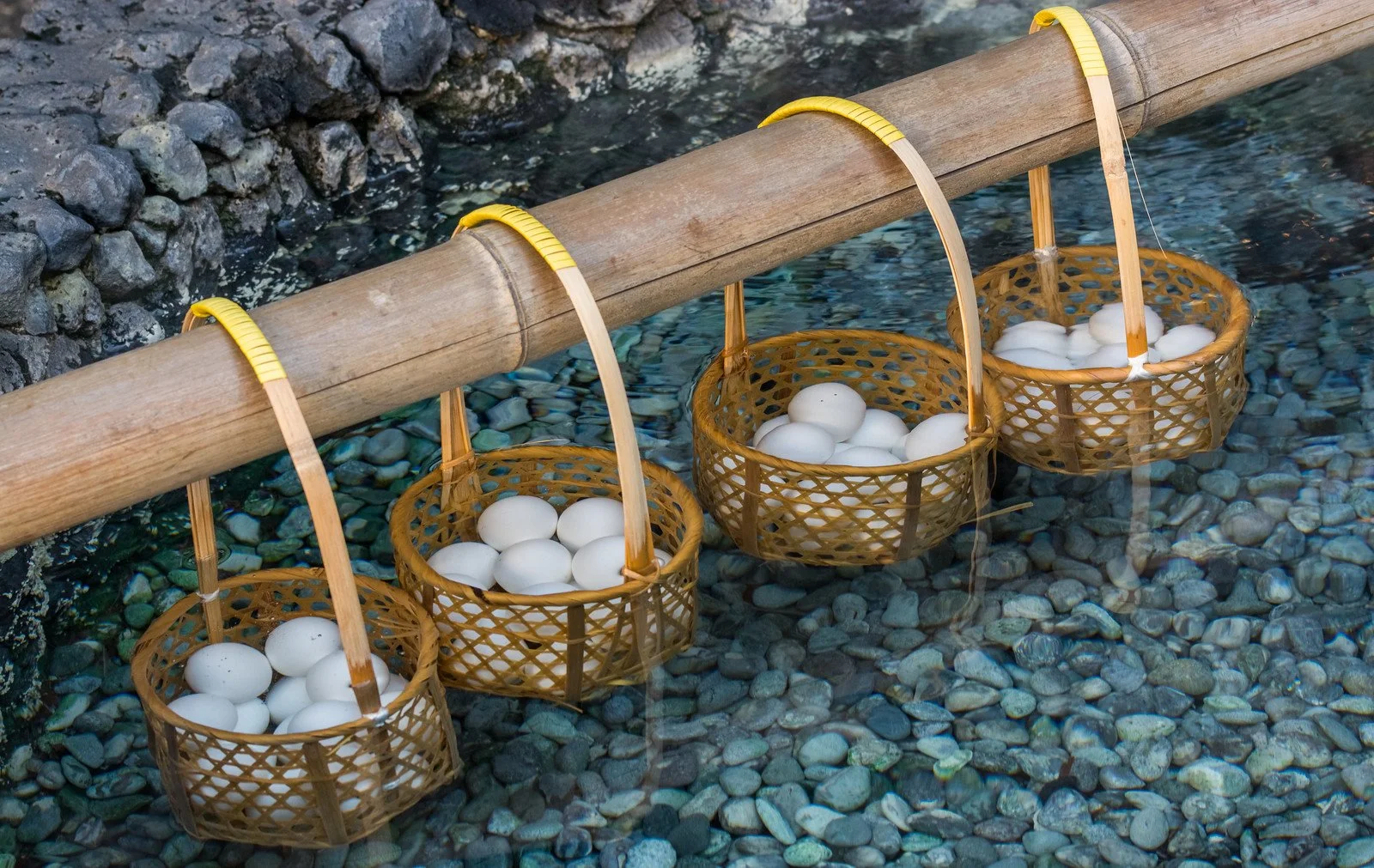
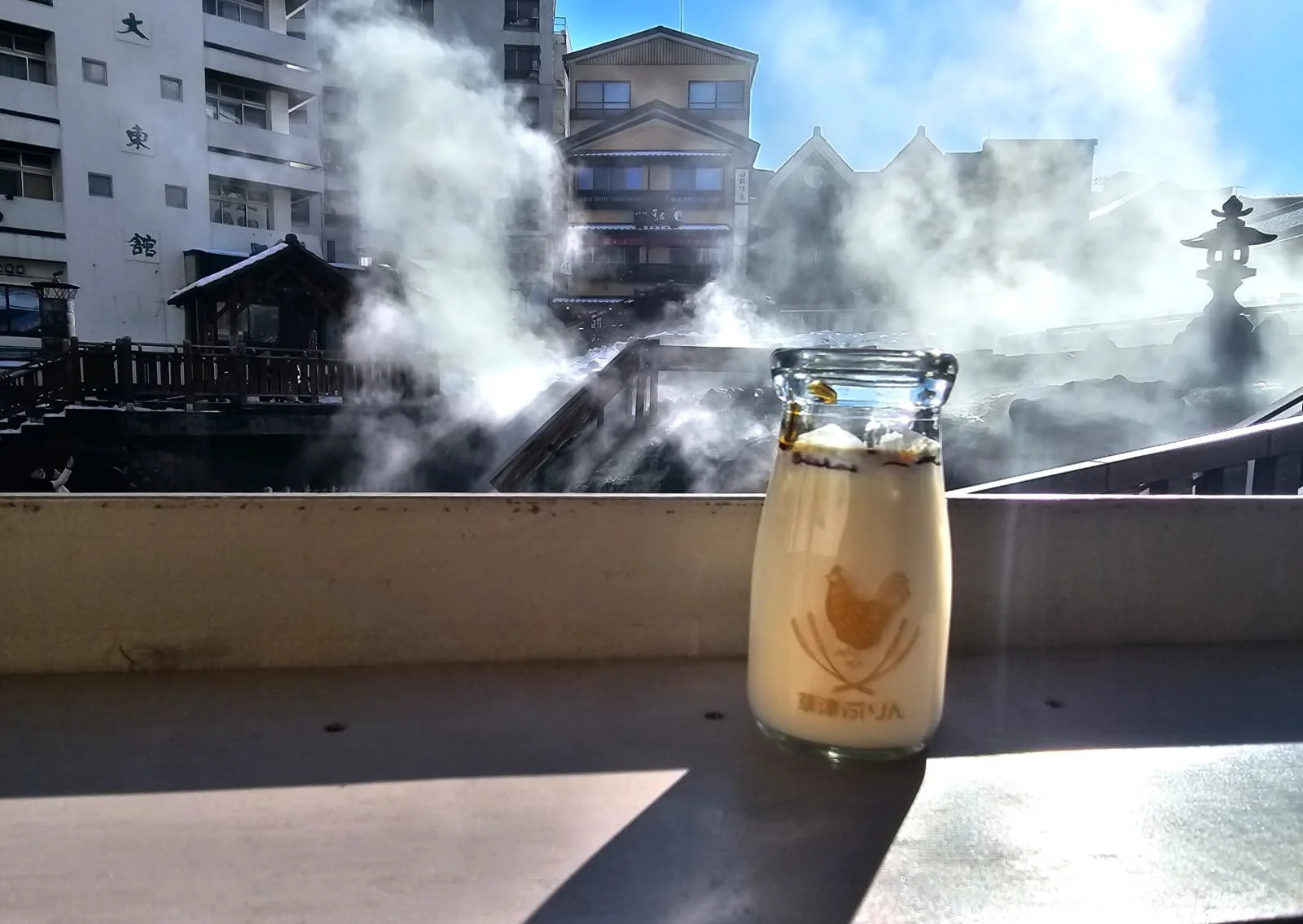
The following morning, after our onsen visit, we stopped by Tamago Farm, a popular spot overlooking the Yubatake. By then, the weather had cleared beautifully, revealing blue skies and drifting clouds that made the steam rising from the hot springs especially striking. We tried the famous Kusatsu Onsen pudding, smooth and lightly sweet, and easy to enjoy while taking in the view. Later, while wandering through one of Kusatsu’s small alleys, we picked up onsen tamago, eggs gently boiled in hot spring water. Warm and simple, they made for a satisfying snack as we continued exploring.
After our morning soak, we also made our way to そば処 わへい (Soba Restaurant Wahei), one of Kusatsu’s most talked‑about dining spots. The restaurant operates on a reservation system and is often busy, but the wait was well worth it. Watching the chef prepare the soba right in front of us, creating a true from‑the‑chef‑to‑the‑table experience. The soba noodles were fresh, delicate, and deeply satisfying, easily one of the best meals we had in Kusatsu.
Alley Walks and One Last Visit to Kosenji
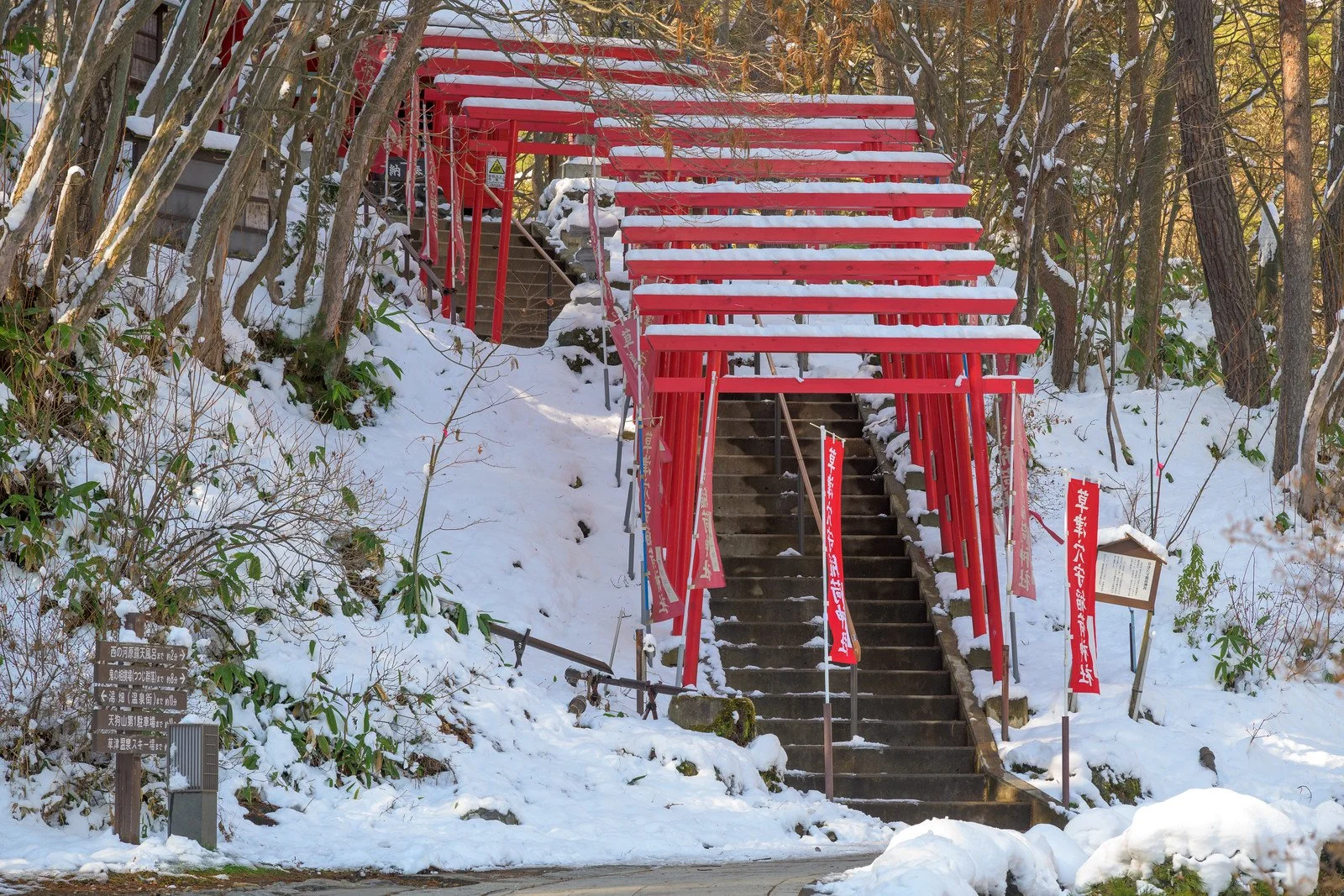
With time still on our side, we spent the afternoon wandering through Kusatsu’s narrow alleys, enjoying the slower pace before departure. We eventually made our way back to Kosenji Temple, this time in daylight. The pagoda here symbolizes faith in the Healing Buddha, and at 21.4 meters tall, it stands at the highest point of the hot spring town. It is often said to be the pagoda closest to the sky in Japan, and standing there, overlooking Kusatsu, it was easy to understand why.
A Return Visit and a Slower Way to Experience Kusatsu
Kusatsu Onsen was not entirely new to us. We had visited once before, in January 2017, on a winter day trip when the candle festival at Kosenji Temple filled the area with soft light. That visit left a strong impression, but returning this time and staying overnight felt noticeably different.
Without the pressure of catching a return bus, we were able to experience Kusatsu in its quieter moments, wander more freely, and see how the town changes from day to night. Staying overnight revealed a gentler, more immersive side of Kusatsu, and it is something we would strongly recommend.
If you are planning a trip in 2026 January or February, you can find the 2026 dates of the candle festival also known as ‘dream lights’ here.
Getting There
Kusatsu Onsen is located in the mountains of Gunma Prefecture and is not directly connected by rail, but it is still straightforward to reach from Tokyo by train and bus or by direct highway bus.
1.By Train and Bus via Naganohara-Kusatsuguchi Station
One of the most common routes is to travel by train to Naganohara‑Kusatsuguchi Station, followed by a bus to Kusatsu Onsen.
From Tokyo, you can take a limited express train from Ueno Station, which reaches Naganohara‑Kusatsuguchi in about 2.5 hours. From there, JR buses connect to Kusatsu Onsen in approximately 25-30 minutes. This route is covered by the Japan Rail Pass, although the bus portion is not covered by all regional passes.
A slower but more affordable option is to use local trains, transferring at Takasaki Station. While the journey takes longer, it is a good choice for travelers looking to reduce costs.
2.By Train and Bus via Karuizawa
Another popular route is via Karuizawa, especially for those using the Hokuriku Shinkansen.
From Tokyo Station, take the shinkansen to Karuizawa (about 70 minutes). From there, Kusakaru Kotsu buses run directly to Kusatsu Onsen, taking around 80 minutes. This route is slightly more expensive, and JR passes are not valid on the bus between Karuizawa and Kusatsu.
3.By Direct Highway Bus
For a more relaxed, transfer‑free journey, direct highway buses operate from several major areas, including Shinjuku, Shibuya and Ueno.
These buses take approximately 4 to 4.5 hours, depending on traffic, and arrive directly at the Kusatsu Onsen Bus Terminal, which is within walking distance of the Yubatake area.
Once in Kusatsu, the town is compact and easy to explore on foot, especially if you are staying near Yubatake.